In Northeast Ohio Urban Parks, Native Trees Do Just As Well As a Non-Native, New Study Shows
August 21, 2026
♫ Hot town, summer in the city. ♫ When it’s hot out, city centers are even hotter, thanks to all the concrete, asphalt, and machinery. This well-established heat island effect has led many urban planners to assume that urban parks aren’t good places for local native trees to live, instead choosing to plant species from Europe and Asia. A new study from researchers at the Holden Arboretum reminds us what happens when we assume.
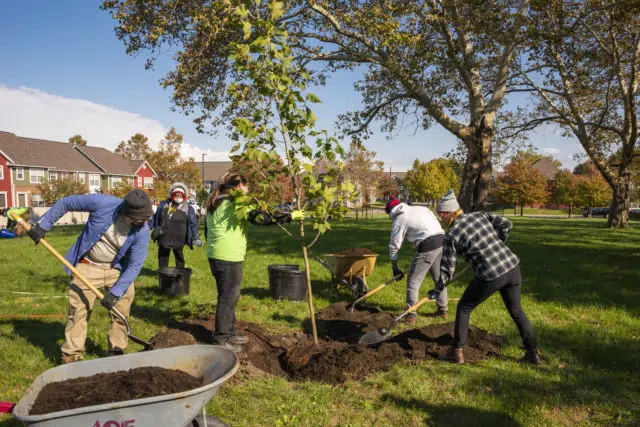
Urban parks can be perfectly suitable for native trees.
Plants have the remarkable ability to adjust their physiology so they can stay hydrated across a wide range of growing conditions. But many people have thought that conditions at urban parks were outside of the range of adjustments a native tree could make, and therefore non-native trees — from hotter climates — would be better suited for the hotter cities. In the new study, researchers showed not only that native trees in urban parks adjusted to summer conditions fine, but also that they performed on par with a commonly planted Asian ornamental tree.
The study was published this month in the scientific journal, Arboriculture & Urban Forestry.
“Everyone assumes cities are stressful for trees, but our data suggests parks are fine to include native trees,” says Juliana Medeiros, plant physiologist at the Holden Arboretum who supervised the study. “The parks we studied were not particularly stressful locations.”
Testing Trees
The study was led by Sharon Danielson, as part of her Ph.D. research with Holden and the Case Western Reserve University Bioscience Alliance. Medeiros and Danielson collaborated with Kevin Mueller at Cleveland State University and Milos Simovic, previously a Master’s student at Cleveland State and now a Ph.D. candidate at the University of British Columbia.
The team tested five tree species growing at two different Ohio parks, Lakeview Cemetery in Cleveland and Secrest Arboretum in Wooster. Three species were northeast Ohio natives: red maple, sugar maple, and black gum. One species was an Ohio native from further south, sweetgum. The final species was Callery pear, a widely planted, highly invasive ornamental tree from East Asia that has been banned from new plantings in Ohio since 2023.
To understand how the trees were managing their water, they measured what’s called leaf hydraulic conductance. It’s a measure of a plant’s capacity to transport water or, put another way, how prepared its internal ‘plumbing’ is to keep up with increasing demand.
“Trees can respond to a changing environment, and some will respond better than others,” says Medeiros. “Plant physiology can give us insight into those responses, but physiology is very slow and difficult to measure, so we set out to identify quick-to-measure physiological proxies that could be helpful for selecting trees for urban environments.”
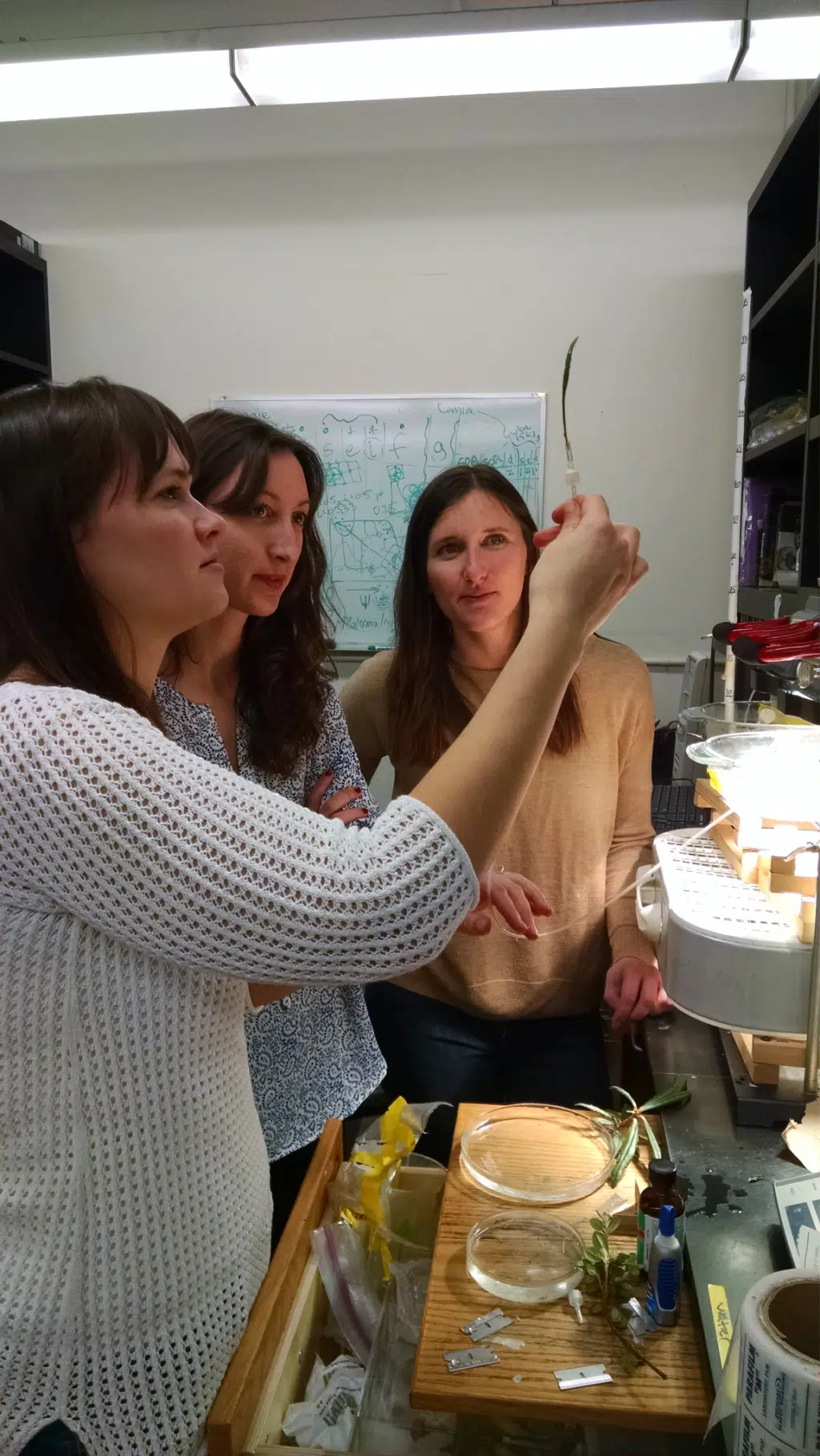
To measure leaf hydraulic conductance, branches are collected from each tree and carefully kept moist as they’re transported back to the lab. After spending the night to equilibrate to lab conditions, the researchers actually hook up an individual leaf to a tube of water. (Yes, really — just like your cut flowers can drink water from a vase, a leaf can ‘drink’ water from a tube.) A grow light encourages the leaf to photosynthesize, while a precise scale measures how much water moves into, then out of, the leaf in a given time frame.
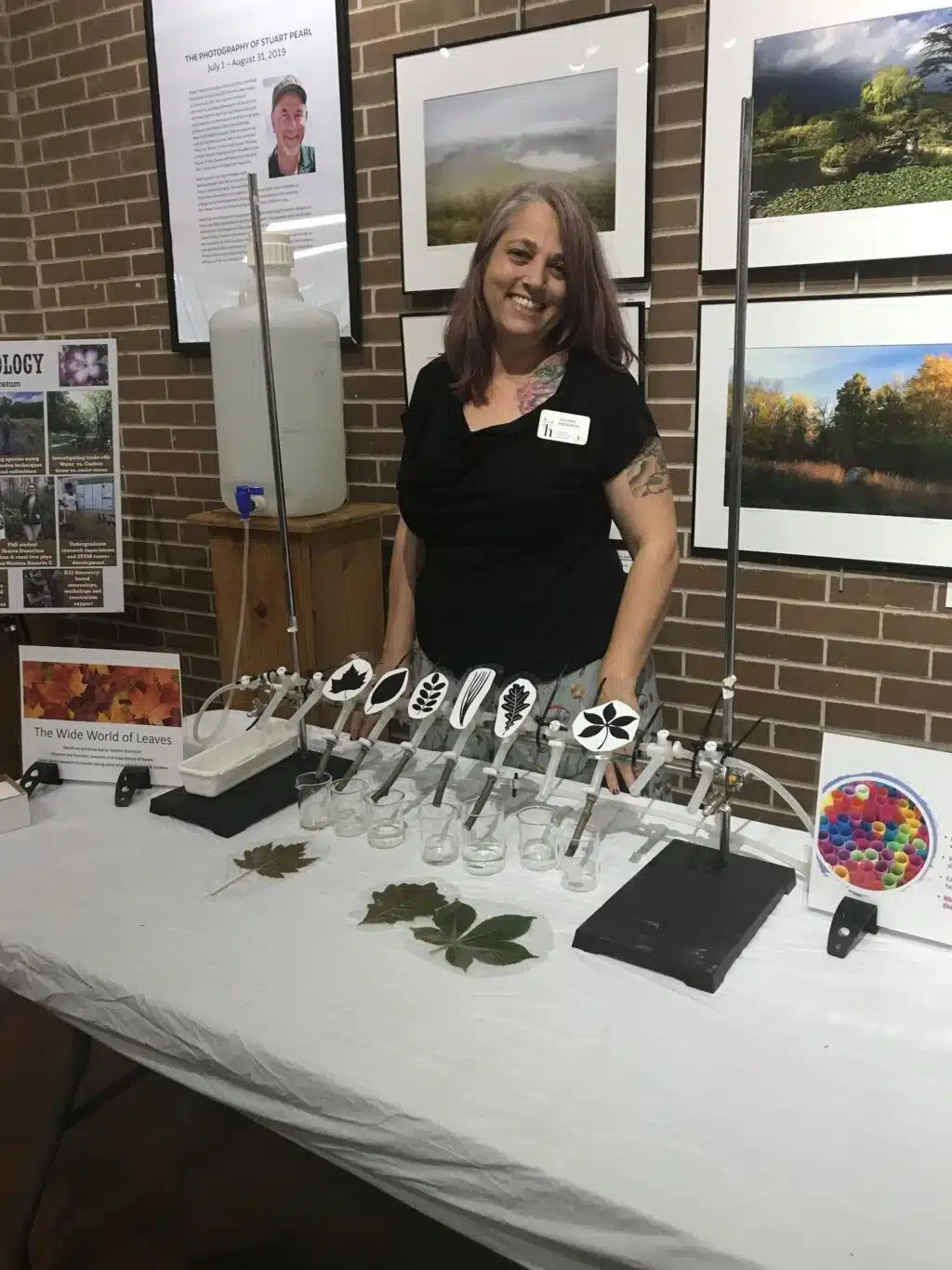
They paired this water transport rate with another measurement, turgor loss point, which is the water stress level at which a leaf’s cells begin to wilt. Together, these measurements provide good metrics for how well a plant is functioning under current conditions.
Adjusting to Stress
From spring to summer, the trees sampled from all five species made measurable physiological adjustments, either in hydraulic conductance, turgor loss point, or both, as conditions changed.
The native species each made an adjustment comparable to that of the non-native pear.
Black gum and sweetgum adjusted the most. Black gum is rarely planted in American cities, but these trees’ response to drought stress suggests they may be underrated candidates for urban planting. The two maples, which are commonly planted in cities, showed relatively less capacity to adjust. For sugar maple, this makes sense, since the species naturally occurs in cooler, shaded forests. But for red maple, this was more of a surprise, as it’s generally considered well suited for urban plantings — it’s planted in cities all over the U.S., even in locations where it’s not native.
The trees didn’t only differ by species; nearly every measurement differed when comparing trees from the two different parks. Lakeview trees outperformed Secrest trees across the board. A number of factors could be responsible for this — Secrest is more dry and compacted, while Lakeview’s soil more closely resembles a natural forest, for example. But in general, the differences highlight that the specific conditions of any given urban park, which are dependent on the park’s history, will also impact tree performance.
Together, the results have direct applications for urban planners deciding what to plant where. “At this point, the whole Earth is a managed garden, human decisions reach everywhere,” Medeiros explains. “How then can we thoughtfully manage our natural resources? Maybe the best place to keep a sugar maple is a really nice forest, and different species, with different physiology, should be prioritized depending on where you are in a city.”

Anna Funk, PhD
Science Communications Specialist
Anna Funk is the Science Communication Specialist for Holden Forests & Gardens. She earned her Ph.D. studying prairie restoration before leaving the research world to help tell scientists’ stories. Today, she wears many hats, working as a writer, editor, journalist and more — anything that lets her share her appreciation of science and its impact with others.
Here’s more to explore

July 30, 2026
Meet Carlo Moreno, Holden’s Newest Scientist
By Anna Funk, PhD, Science Communications Specialist
In Akron, Ohio, a community garden called Akron Cooperative Farms sits on land that was once used as baseball fields. Many of the gardeners there are immigrants and refugees from... more

July 20, 2026
Award-Winning Research Reveals How Wildflowers May Struggle Under Climate Change
By Anna Funk, PhD, Science Communications Specialist
In Ohio, we think of fall as the end of the growing season. But for many California wildflowers, fall is a beginning. From the deserts of Southern California to the... more

June 3, 2026
New Study Tracks Long-Term Results of Forest Fungi Restoration Experiment
By Anna Funk, PhD, Science Communications Specialist
Few places are as intensively landscaped as golf courses. They’re mowed and manicured, they’re fertilized and kept chemically weed-free, and they’re tromped on half the year by golfers, carts, and... more

May 4, 2026
How Much Sun Is Too Much Sun?
By Anna Funk, PhD, Science Communications Specialist
Have you ever noticed a plant whose leaves were turning red or purple, especially in a particularly sunny spot? The plant may be making the red pigment you see to... more

January 6, 2026
Life in the Winter Forest
By Anna Funk, PhD, Science Communications Specialist
Take a stroll through the forest at the Holden Arboretum on a cold winter’s morning — the trails are open year-round — and the quiet stillness might trick you into... more

December 19, 2025
New Study Reveals How Beech Leaf Disease Disrupts the Forest Ecosystem
As beech leaf disease continues to sweep across our region, the longer-term effects of the disease are starting to reveal themselves in the epicenter — right here in Lake County.... more

November 11, 2025
What’s That Thing on the Emergent Tower? HF&G Tests New Forest Pest Monitoring Tool
By Anna Funk, PhD, Science Communications Specialist
If you’ve been to the Kalberer Emergent Tower at the Holden Arboretum lately — let’s be honest, who hasn’t (#fall) — you may have noticed something new: A pale purple... more

October 22, 2025
Newfound Garlic Mustard Aphid May Help, but Won’t Solve, Our Garlic Mustard Problem
By Anna Funk, PhD, Science Communications Specialist
In 2021, Rebecah Troutman — at the time Holden Arboretum’s natural areas biologist — was making her rounds and came across an insect she hadn’t seen before. It appeared to... more

September 8, 2025
Ongoing HF&G Study Tests a Novel Way to Give Urban Tree Plantings a Boost
By Anna Funk, PhD, Science Communications Specialist
Planting trees in cities can bring a host of benefits. They pull pollutants and carbon dioxide out of the air, cool neighborhoods, reduce stormwater runoff, and make streets more inviting... more