Walking along a rocky creek at the bottom of a steep, shady canyon, ancient trees towering overhead, a surprising coolness on the breeze — a traveler might feel like they’re not in northeast Ohio anymore. That’s the magic of Stebbins Gulch, a local heritage site under the longtime care of the Holden Arboretum.
The National Natural Landmark is a local icon, but it’s also ecologically noteworthy — it’s an extremely rare example of what a forest in our region looks like when protected from human development. This is what got the attention of Kyle Scotese, a local algae expert.
Today, Scotese is a biologist with environmental consulting firm, EnviroScience. But he’s spent decades of his career — and spare time — exploring the algae in our communities and natural areas. He teamed up with Holden’s conservation biologist, Mike Watson, to hunt for algae in Stebbins Gulch, and was greatly rewarded for his efforts. He discovered an entirely new species, a type of algae called a diatom. It’s named Stauroneis stebbinsgulchensis, after the special place where it was found at the Arboretum.
The discovery was announced in the international journal Diatom Research this summer.
Algae Hunter
Scotese is an algal taxonomist. That means he loves identifying, classifying, counting, and documenting algae. He took this interest to a new level when, during the pandemic, his then-employer shipped him two research-grade microscopes so he could work from his home in Chagrin Falls. It gave him an idea.
“I emptied my whole retirement account and blew it on turning my garage into a lab,” says Scotese. “I had work to do by day, but at night I had those nice scopes calling to me, and I got curious. Maybe I could collect some samples from the Chagrin River and see what algae were there. I was curious what was lurking in the water.”
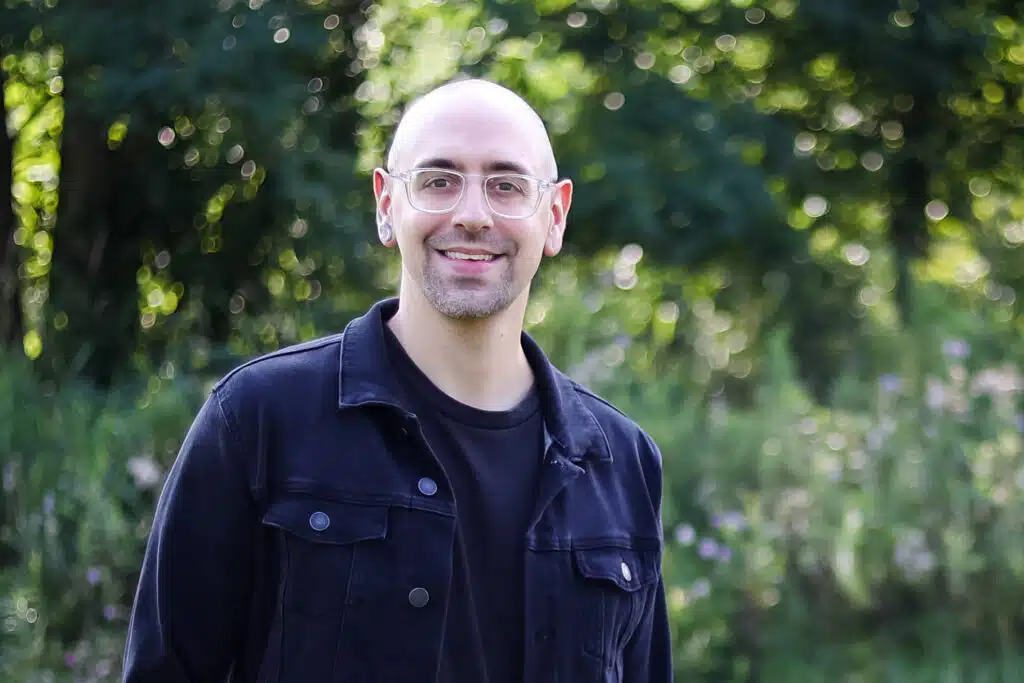
Now with 24/7 access to lab equipment and pandemic-shutdown levels of spare time, he started algae hunting. He started a blog, Chagrin River Algae, to document what he found. “I started posting, ‘here’s what’s in the bird fountain in town, here’s what’s under the bridge,’ it was all just for fun,” he says.
“But I kept seeing the same things over and over,” he continues. “One of the things about algae, and diatoms in particular, is they can be unique to certain areas — there are a lot of endemics and other geographically restricted populations in unique areas, just like there are with plants and animals.”
He needed a unique area. Scouring the Chagrin’s watershed on a map, he noticed the creek Stebbins Run. “I had heard legends of Stebbins Gulch from my other biology friends, I knew it was only accessible with a guide,” he says. “It piqued my interest.”
He reached out to the Arboretum, connected with Mike Watson, Holden’s wildlife biologist, and acquired the appropriate permits. In April 2022, Scotese tagged along with Watson while he led a volunteer bird survey through the gulch. “We have some really well-protected areas that could be more conducive to interesting populations or communities,” says Watson.
Sampling the Gulch
Scotese says his goal for this first visit was just to capture as much algal diversity as possible. “Anywhere there’s water, these things will colonize, and they even live in soils and on rocky substrates,” he says. So he scraped up samples of algae wherever he found it — in the streambed, in puddles, in wet spots along the ravine, everywhere.
Partway up a rock wall near Big Falls, the tallest waterfall in the gulch, he noticed water seeping out of the bedrock. It was streaked with bright orange slime, a sign of iron-oxidizing bacteria. He took a sample there, too, adding to his collection to bring home to the lab.
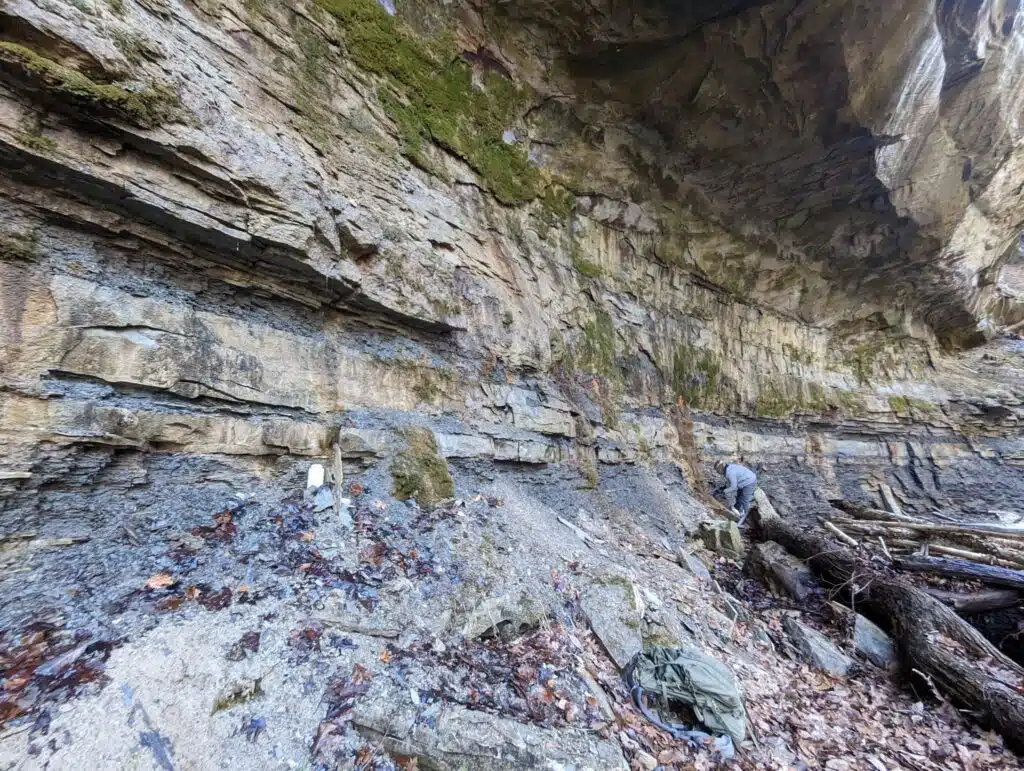
Back home, when he started working through his samples, he found that most of what he had collected from the streambed were familiar algae. But when he got to the sample from the orange wall, he found something more interesting, a type of diatom called Stauroneis.
Diatoms are single-celled algae. They photosynthesize like a plant, getting their energy from the sun. Each diatom has a hard shell, a cell wall made of silica — essentially, glass. And it’s this shell structure that humans use to differentiate one diatom species from another.
“With diatoms in particular, the best way to identify them is to boil them in nitric acid,” Scotese says. He’s not kidding: to get the best possible view of their glasslike shell, you first want to digest all the living material in acid. Then you can look under a microscope to see the shell’s features: its size, shape, striations, and other characteristics.
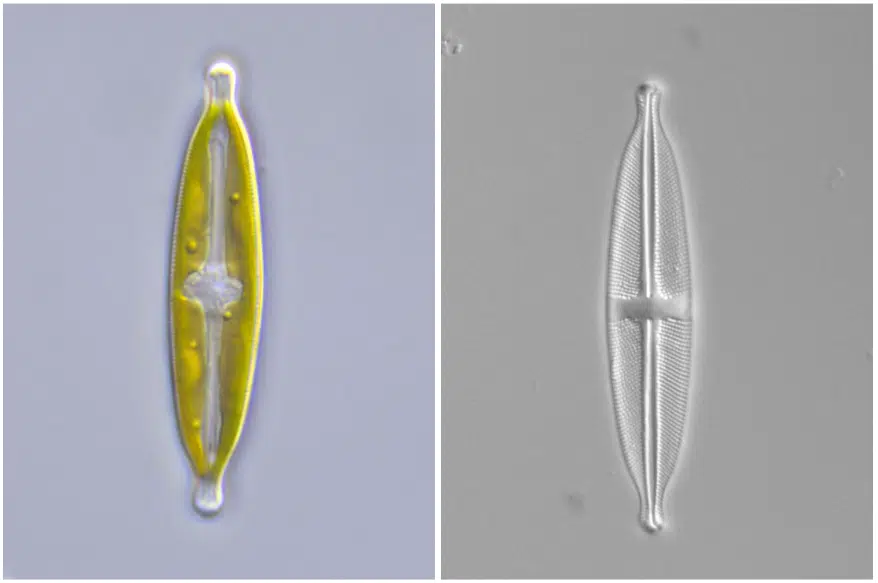
Stauroneis diatoms are known for preferring more pristine environments with minimal human impacts, which made sense to Scotese, given the location. But as he started taking measurements to figure out which Stauroneis species he was looking at, he found that it didn’t really fit any of the existing records. And it was quite large — for a diatom — five to ten times the size of some other varieties.
He reached out to a friend and diatom expert, David Burge, editor of Diatoms of North America. He agreed it didn’t fit with any documented species.
Confirming a New Species
“It takes a lot to demonstrate that something is a new species. In the past, you could just make a line drawing and say, ‘I found this cool new thing, and you gotta trust me,’” Scotese explains. “Today, you have to get scanning electron microscope (SEM) images to show structural details you can’t see with a regular light microscope like we use every day at work.”
Luckily, Burge had a friend who’s a professor at Indiana State University who has access to an SEM. They shipped him the samples, then got on a video call to look at them under the microscope together. “We could literally say, ‘there, that’s it, zoom in there, take a picture of that,’” Scotese says.
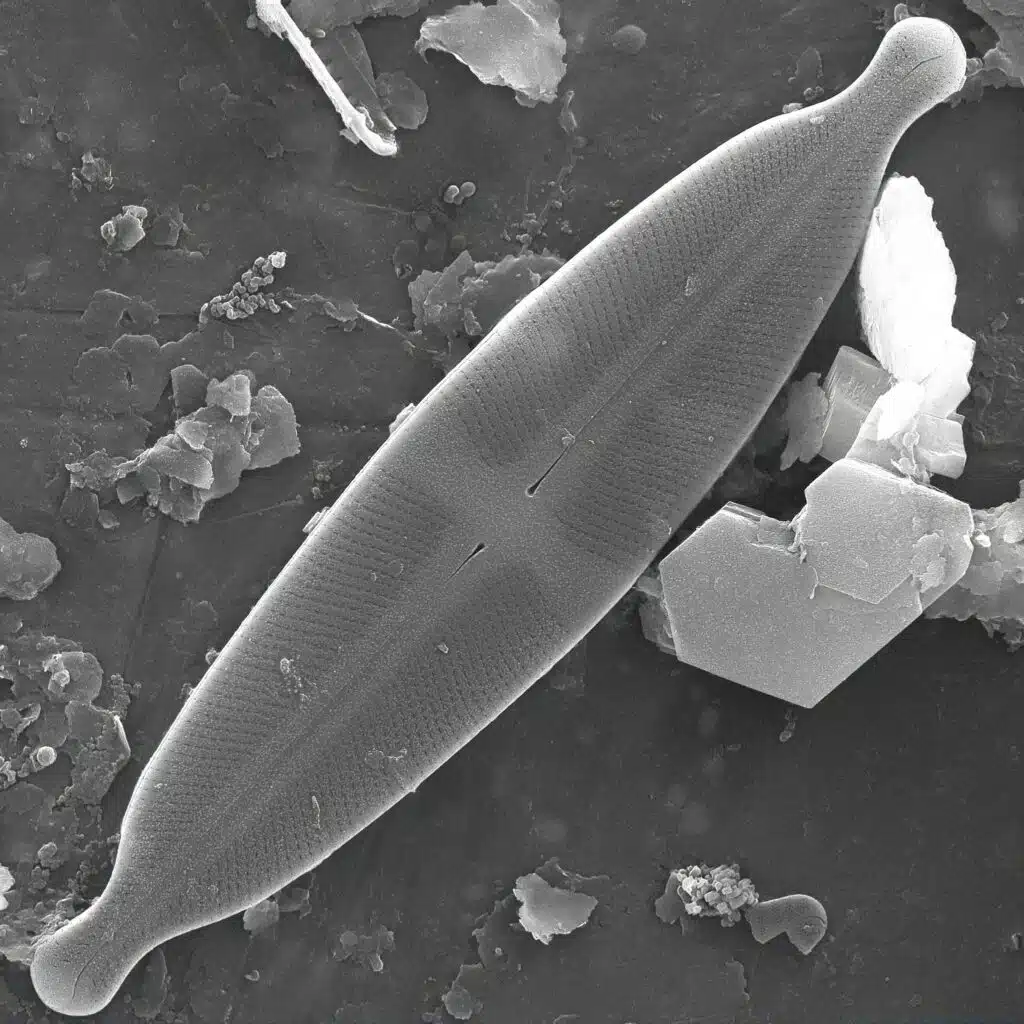
But before they could publish their findings, they also needed an in-depth comparison between the new diatom species and its closest relative. Unfortunately, its closest lookalike, a Stauroneis from the Rocky Mountains, didn’t have SEM images on file. So the team had to hunt down that species, too — they found a sample of it in a herbarium of algae in Philadelphia — and then send it to Indiana to repeat the imaging process. “The sample they gave us was tiny, we barely found three or four diatoms, but we got really lucky and got what we needed.”
Once (finally) confirmed, it only seemed fitting to name the new diatom after its home, Stauroneis stebbinsgulchensis.
A Special Gulch
The Holden Arboretum owns a large share of the Stebbins Gulch watershed, and has kept most of it protected for decades. This means Stebbins Run, the stream that created the gulch over thousands of years, today works its way through healthier landscapes than a lot of streams in northeast Ohio do.
“As with any natural community, the healthier the system, the more diversity you’re likely to have, and the more potential that unique or rare species will be there,” says Watson. “I think it’s a combination of the geology, land-use history, and long-term protection of a large part of that watershed that creates the right habitat for this kind of diatom species.”
For now, Stauroneis stebbinsgulchensis holds the distinction of being the first species ever formally described from Stebbins Gulch. But given how little the gulch’s diatoms and other algae have ever been studied, there’s a chance it won’t be the last — there’s no telling what else is still waiting to be found on a wet rock wall in that ravine.
Cover photo: Big Falls in Stebbins Gulch, Holden Arboretum. A new species of diatom, Stauroneis stebbinsgulchensis, was found on the rock wall on the far left side of this photo. (Credit: Brad Bartelme)
Citation: Scotese, Kyle C., David R. L. Burge, Jeffery R. Stone, and Michael Watson. “Stauroneis stebbinsgulchensis sp. nov.(Bacillariophyta: Naviculales), a new pseudoaerial diatom from a lithophytic iron-oxidizing bacterial biofilm and groundwater seep at Stebbins Gulch Natural Area, Ohio, USA.” Diatom Research (2026): 1-24.
About Holden Forests & Gardens: Holden Forests & Gardens is made up of two of Northeast Ohio’s most important environmental and cultural institutions — the Holden Arboretum and Cleveland Botanical Garden — whose mission is to connect people with the wonder, beauty, and value of trees and plants, to inspire action for healthy communities. One of the largest public gardens in the country, Holden Forests & Gardens has 21,000 member households and an annual attendance of nearly 350,000 for whom we strive to provide inspirational and educational visitor experiences. For more information, visit holdenfg.org.
Media Contact:
Stacey Vaselaney
slvaselaney@slvpr.com
(216)905-0908
Here’s more to explore

July 30, 2026
Meet Carlo Moreno, Holden’s Newest Scientist
By Anna Funk, PhD, Science Communications Specialist
In Akron, Ohio, a community garden called Akron Cooperative Farms sits on land that was once used as baseball fields. Many of the gardeners there are immigrants and refugees from... more

July 20, 2026
Award-Winning Research Reveals How Wildflowers May Struggle Under Climate Change
By Anna Funk, PhD, Science Communications Specialist
In Ohio, we think of fall as the end of the growing season. But for many California wildflowers, fall is a beginning. From the deserts of Southern California to the... more

June 3, 2026
New Study Tracks Long-Term Results of Forest Fungi Restoration Experiment
By Anna Funk, PhD, Science Communications Specialist
Few places are as intensively landscaped as golf courses. They’re mowed and manicured, they’re fertilized and kept chemically weed-free, and they’re tromped on half the year by golfers, carts, and... more

May 4, 2026
How Much Sun Is Too Much Sun?
By Anna Funk, PhD, Science Communications Specialist
Have you ever noticed a plant whose leaves were turning red or purple, especially in a particularly sunny spot? The plant may be making the red pigment you see to... more

January 6, 2026
Life in the Winter Forest
By Anna Funk, PhD, Science Communications Specialist
Take a stroll through the forest at the Holden Arboretum on a cold winter’s morning — the trails are open year-round — and the quiet stillness might trick you into... more

December 19, 2025
New Study Reveals How Beech Leaf Disease Disrupts the Forest Ecosystem
As beech leaf disease continues to sweep across our region, the longer-term effects of the disease are starting to reveal themselves in the epicenter — right here in Lake County.... more

November 11, 2025
What’s That Thing on the Emergent Tower? HF&G Tests New Forest Pest Monitoring Tool
By Anna Funk, PhD, Science Communications Specialist
If you’ve been to the Kalberer Emergent Tower at the Holden Arboretum lately — let’s be honest, who hasn’t (#fall) — you may have noticed something new: A pale purple... more

October 22, 2025
Newfound Garlic Mustard Aphid May Help, but Won’t Solve, Our Garlic Mustard Problem
By Anna Funk, PhD, Science Communications Specialist
In 2021, Rebecah Troutman — at the time Holden Arboretum’s natural areas biologist — was making her rounds and came across an insect she hadn’t seen before. It appeared to... more

September 8, 2025
Ongoing HF&G Study Tests a Novel Way to Give Urban Tree Plantings a Boost
By Anna Funk, PhD, Science Communications Specialist
Planting trees in cities can bring a host of benefits. They pull pollutants and carbon dioxide out of the air, cool neighborhoods, reduce stormwater runoff, and make streets more inviting... more