What’s Happening Below the Forest Floor? Lessons Learned from Decades of Soil Data
December 5, 2025
Caring for our planet includes an assurance that our natural ecosystems have a diversity of living things, clean water, thriving plants, and resiliency to disturbance. Soils are instrumental to all of these. This is why we dedicate an entire day to celebrating the importance of healthy soil: the United Nations’ World Soil Day, celebrated annually on December 5th.
Studying soil health is part of our everyday life in the soil ecology lab here at HF&G. We study soil health in urban spaces, in response to industrial pollution, and in terms of microbial diversity. Whenever we have a question about our environment, we almost always look below ground to find the answers. The current question at the forefront of our minds is: what do the changes in soil temperatures that we’ve seen over the last decades mean for the forest?
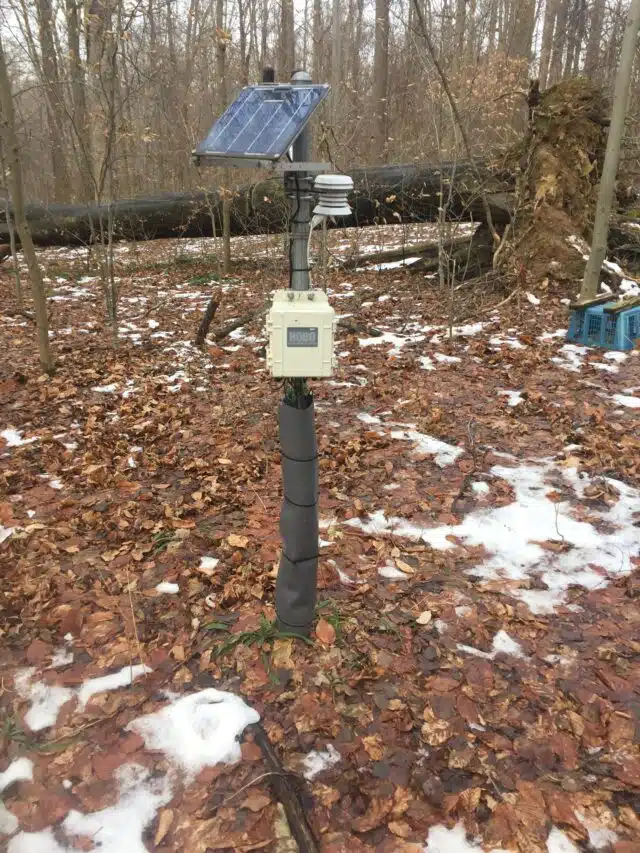
We’ve been monitoring the temperature of the soil in the Stebbins Gulch natural area at the Arboretum since the fall of 2006. Thanks to our automatic data loggers, we have readings from every 8 minutes over that timespan. These loggers are buried 2 cm, 6 cm, or 10 cm below the soil surface to give us an idea of temperature variability across soil depths.
The difference between 2 cm and 10 cm may sound small — and it is to us (8 cm is just over 3 inches) – but to a fungus, it can make all the difference. In fact, we know that the fungal species at 2 cm soil depth are largely different from those at the 6 cm soil depth at Stebbins Gulch. Across forests worldwide, scientists have found that small changes in soil depth can lead to big changes in the soil taxa. Are temperature changes at these depths contributing to these changes?
This is where our decades of soil temperature data come in. Our temperature data show that at the shallow soil depth, temperature is more variable, especially in the late winter and early spring. In Ohio, this is the time of year when we can go from sunny warm days to freezing snowy days in just 24 hours — the shallow soil depths are exposed to these elements to a greater extent than the deeper soil depths.
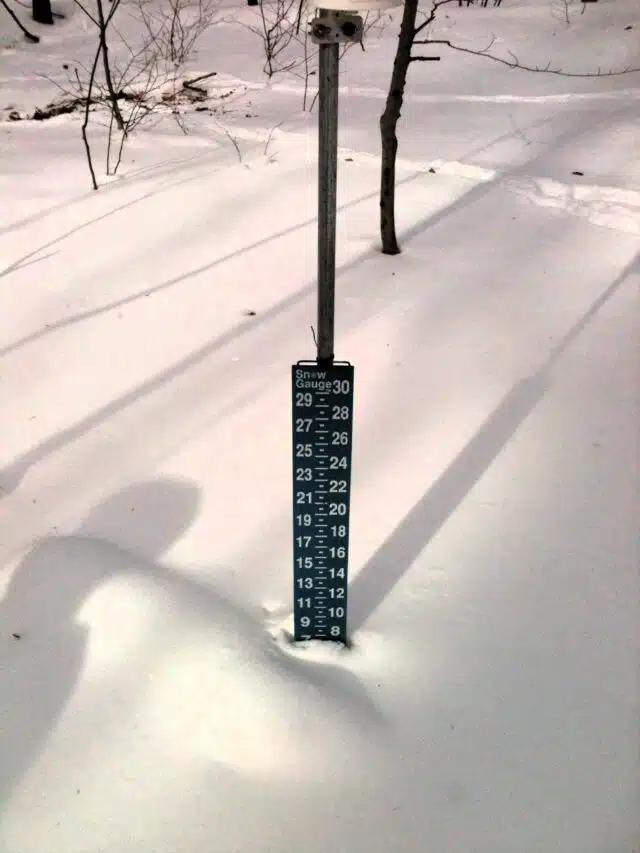
We’ve also seen a lot of temperature variability between years, especially in the winter months. In some years, like 2012, the soils stayed above freezing all winter. This was, on average, the warmest Northeast Ohio had ever seen at that time. But we’ve seen soil temperatures stay above freezing all winter fairly consistently since then — even when the winter air was extra freezing, like in 2014. This was a winter that experienced a polar vortex and yet the soil stayed unfrozen. We think this was because of consistent snow cover; the winter of 2014 ranks as one of the top ten snowiest winters for our region! Enough snow can insulate the soil and prevent the ground from freezing, despite sub-zero air temperatures.
In order to understand how temperature and snow cover impact soil fungi, it’s important that we study it over multiple years. 2026 will mark the 20th year of recording soil temperature data in Stebbins Gulch. Having these 20 years of data will allow us a comprehensive view of how changing temperatures affect forests over time. This is especially important because climate models predict that our region will experience more intermittent snowfall as the planet warms.
One of the best parts of this project has been our ability to partner with local high schools. In 2024, we partnered with students from the climate change class at the Mastery School of Hawken, a high school in Cleveland. Students used our soil temperature data to ask their own questions relating to climate change in our region.
We have also recently brought in a 10th grade student from Hathaway Brown — a local all-girls private elementary, middle, and high school — who is participating in their Science Research & Engineering Program. She’ll be one of the first researchers to dig into our leaf litter samples dating back to 2006 to identify what fungi are present.
We are excited to add year 20 to our data set. This year, it feels especially appropriate that World Soil Day falls just before winter; we think the winter could be key to understanding how temperature affects the soil in our forests! And understanding soils — and how they change through time — are key to keeping forests healthy and resilient all year long!
Sarah Kyker, PhD
Postdoctoral Research Associate
Dr. Sarah Carrino-Kyker is a microbial ecologist interested in the influence of environmental change, both natural and human-caused, on microbial communities. Because microorganisms are small in size, they are environmentally sensitive. Yet their health and functionality can have a large impact on the overall health of a habitat due to their role in ecosystem processes. Her current research is focused on the soil communities of forests, how they’re impacted by environmental changes, and how these impacts in turn affect the health of the overall habitat or ecosystem.
Here’s more to explore

December 19, 2025
New Study Reveals How Beech Leaf Disease Disrupts the Forest Ecosystem
As beech leaf disease continues to sweep across our region, the longer-term effects of the disease are starting to reveal themselves in the epicenter — right here in Lake County.... more

September 8, 2025
Ongoing HF&G Study Tests a Novel Way to Give Urban Tree Plantings a Boost
By Anna Funk, PhD, Science Communications Specialist
Planting trees in cities can bring a host of benefits. They pull pollutants and carbon dioxide out of the air, cool neighborhoods, reduce stormwater runoff, and make streets more inviting... more

January 16, 2025
Seedling Scramble: How Warming Changes Plant Communities
By Anna Funk, PhD, Science Communications Specialist
Kirtland, OH — Our world is warming, and how exactly that will affect our ecosystems is a critical question. As the climate shifts, plants and animals are already responding in... more

January 8, 2025
Holden’s Wildflower Garden Is a Living Laboratory for Climate Change Research—Here’s What Our Researchers Have Learned
Public gardens like the Holden Arboretum and the Cleveland Botanical Garden are great places to visit. But patrons exploring the latest Frost event might miss that behind the scenes, these... more

December 5, 2024
The Incredible Life Beneath Our Feet
By Sarah Kyker, PhD, Postdoctoral Research Associate
World Soil Day is held annually on December 5th as a way to foster awareness for soil conservation. This year’s theme for World Soil Day is “Caring for Soils: Measure,... more
September 13, 2024
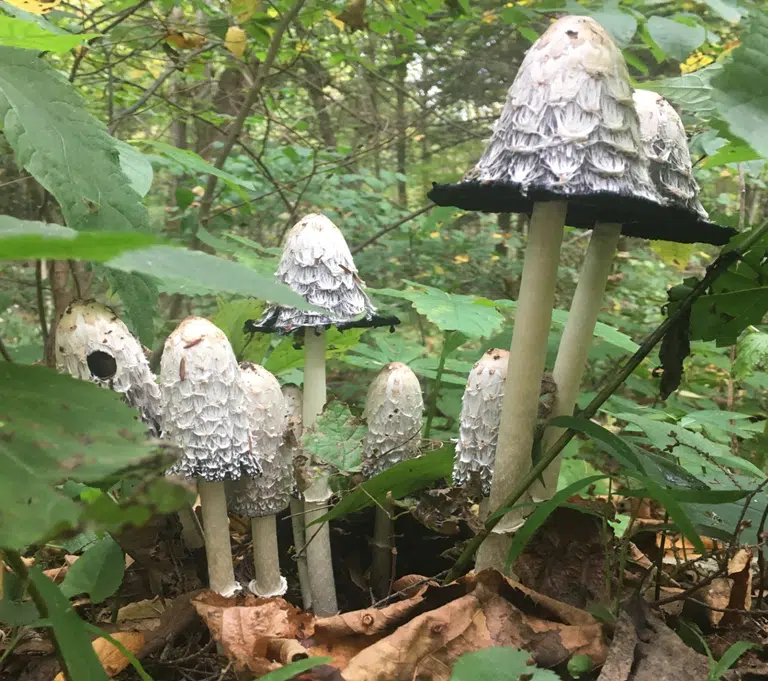
Edible Mushrooms and Their Poisonous Look-alikes
By Claudia Bashian-Victoroff, MS, Research Specialist
If you are new to identifying mushrooms, I recommend that you read my earlier article, How to identify mushrooms and other fungi, for context and terminology before reading on. Mushroom... more
September 6, 2024
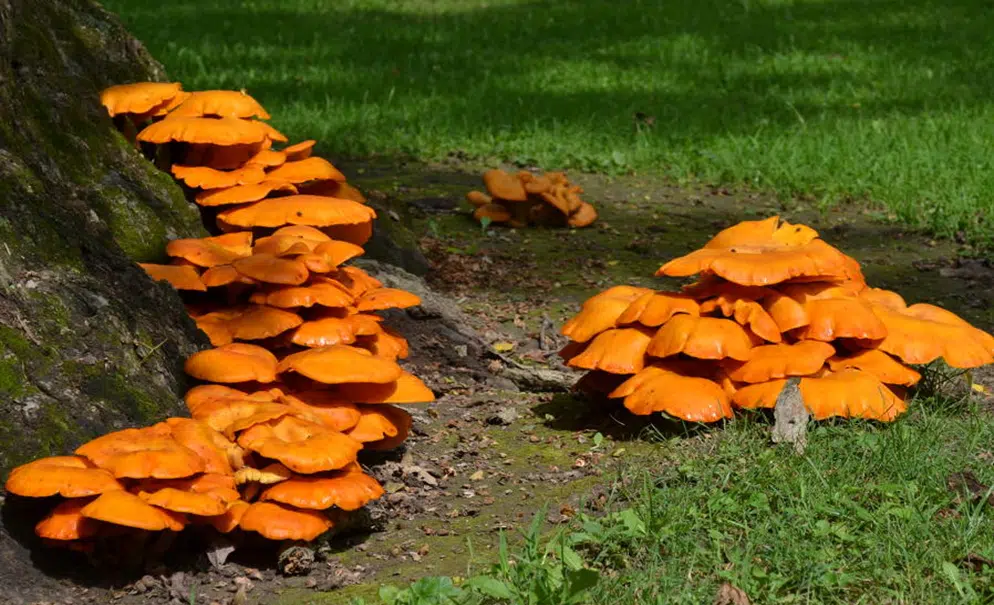
Common Lawn Mushrooms and What To Do About Them
By Claudia Bashian-Victoroff, MS, Research Specialist
As a scientist at HF&G, I often hear questions like, “How can I get rid of mushrooms in my yard?” or “Is it safe to have mushrooms in my lawn?”.... more

November 8, 2023
Holden Researchers Uncover How a Resilient Tree Acclimates to Stressful Environments
By Anna Funk, PhD, Science Communications Specialist
The eastern red cedar (Juniperus virginiana) is a hardy tree native to the eastern U.S. But lately it’s been encroaching on ecosystems out West — could its physiology be the... more

October 24, 2023
New Research Reveals How the Environment and Genetics Influence Plant Microbiomes, Offering Insights for Climate Resilience
By Anna Funk, PhD, Science Communications Specialist
The more researchers investigate the microscopic word, the more microbes have been found living in and on other organisms — including plants. These microbes aren’t just hitching a ride; they’ve... more