Restoring Forests, Engaging Landowners, Advancing Science—All in One Place
September 17, 2025
A version of this article originally appeared on The Applied Ecologist.
What would it look like to combine scientific research, public education, and ecosystem restoration all in one place?
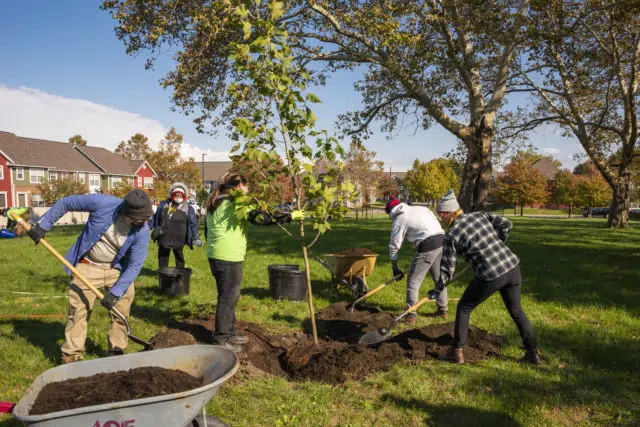
Less than ten miles from Lake Erie’s southern shore, researchers, land managers, and educators have teamed up to create a forest that is simultaneously a restoration project, living research laboratory, and forestry demonstration site. This 67-acre forest is the Working Woods Learning Forest, and its gates are open to landowners and forest professionals who can put the knowledge generated there into immediate practice.
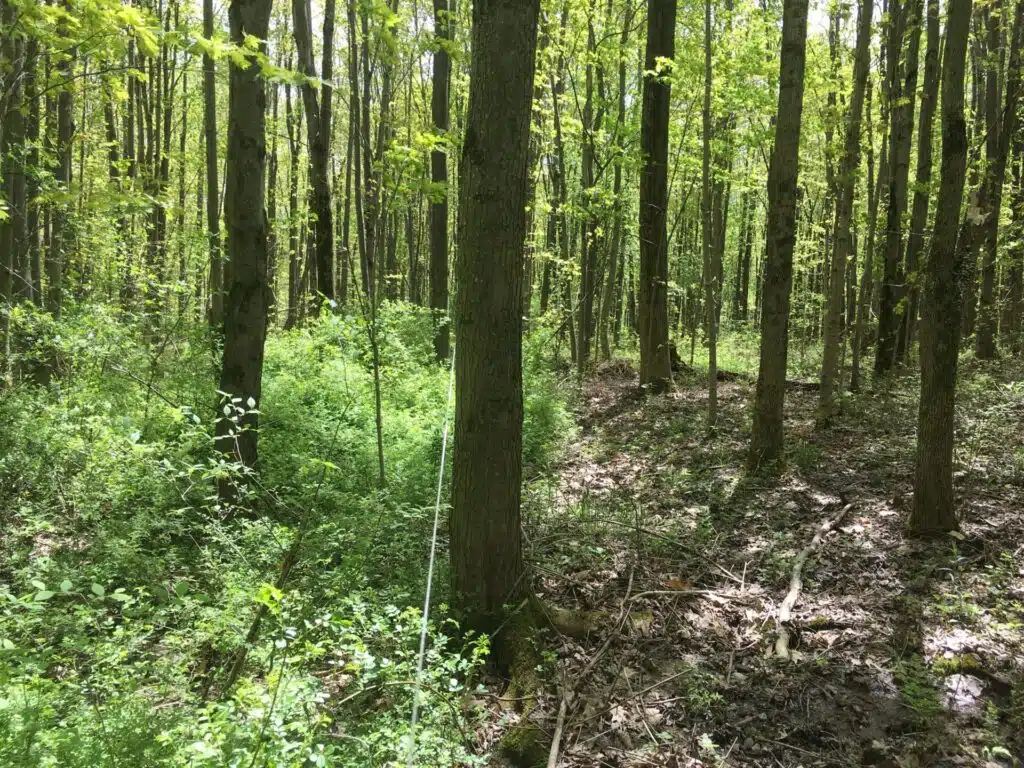
Here in northeastern Ohio, many forests are young, growing on land that was clear-cut and used for agriculture before being left fallow to eventually return to woodland. These tend to be even-aged stands dominated by the few species that first colonized the fallow field decades prior. Biodiversity is low, as is structural complexity, and the understory is typically thick with non-native invasive shrubs.
Proper management can improve the resilience, diversity, and ecological function of these forests — but the specifics of what constitutes “proper management” haven’t been rigorously studied, especially in light of the effects of climate change, invasive species, and forest pests. This question isn’t unique to these secondary forests: Across ecosystems, the practice of ecological restoration can frustrate practitioners and scientists alike, with so many factors at play that actual restoration outcomes are predictably unpredictable.
The challenge of restoring healthy woodlands
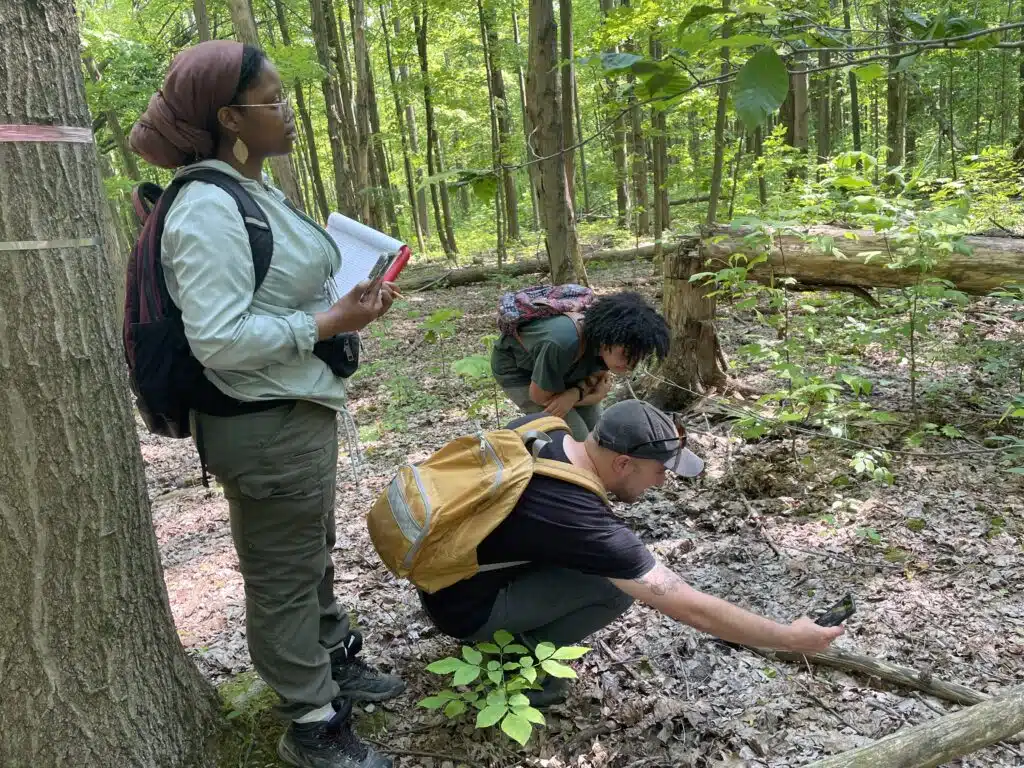
Working Woods was designed to address these challenges. We’re implementing multiple management strategies on stands with different land-use histories, testing and comparing common techniques in our region, monitoring the impacts over time, and even quantifying the effort required to implement different strategies. And most importantly, these results feed directly into our outreach programming. Since 2019, nearly 500 landowners, collectively managing thousands of acres of forested land, have visited Working Woods for on-site tours and workshops. Virtual and off-site events have reached hundreds more.
The project is part of a global effort from Botanic Gardens Conservation International (BGCI) called the Ecological Restoration Alliance (ERA). The goal of the ERA is to advance the science and practice of restoration, and currently includes 48 partner projects around the world.
What we’ve learned
Our research has generated a number of key findings related to how typical forest management activities, like thinning trees and removing shrubby invasive species, quantifiably impact different management goals. Girdled trees, for instance, slowly lost their leaf canopies, and measures of canopy openness did not increase until four or more years after girdling. We also found that thinning trees to open up the canopy, without removing invasive shrub species, increased fruiting and seed dispersal by birds for glossy buckthorn (Frangula alnus), one of our most pervasive invasive shrubs. Only thinning combined with invasive shrub removal increased the recruitment of native species in the understory.
While testing different management strategies at Working Woods, we’ve also documented the time and effort required for management, not just the effectiveness of each method. Removing non-native shrubs can seem an insurmountable task, especially in heavily invaded sites. We found that after the first year of control, time required to remove invasive shrubs decreased tenfold, and by year three, leveled out at just a few (3-9) hours per hectare (about 2.5 acres).
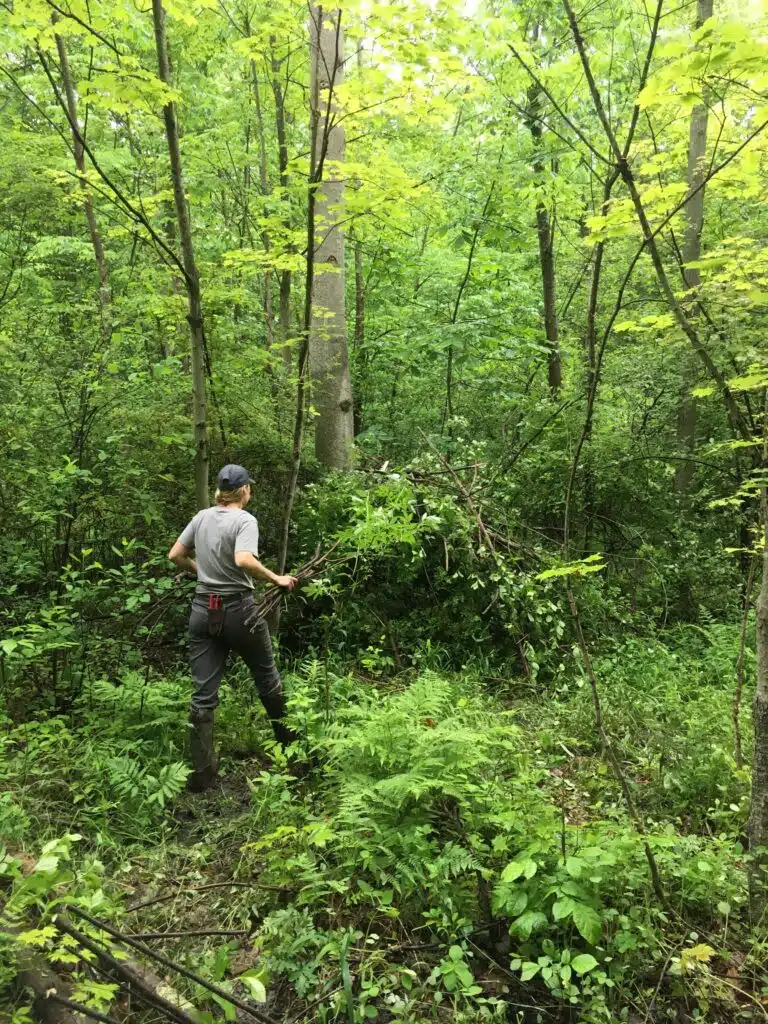
We’ve also learned that landowners want personalized support. Just this year, we’re expanding the Working Woods Learning Forest to include a new program that will allow us to personalize advice for landowners. Holden Arboretum Consulting Forestry now offers forestry services to help woodland owners to meet their goals, including increasing wildlife habitat, managing invasive species, improving stands for timber, enrolling in carbon markets or cost-share program, and more. The launch was supported by the U.S. Forest Service via the Inflation Reduction Act, and fees for service will sustain the program into the future.
Looking forward
Working Woods will continue to evolve as both a forest stand and a programme. In the years ahead, researchers plan to expand management trials—experimenting with additional thinning, ongoing invasive control, and even planting desired species like oaks. We will continue to track biodiversity, forest productivity, soil conditions, and other environmental factors to better understand why management outcomes can differ across sites. As the forest continues to grow healthier, Working Woods is poised to keep serving as a model for how research, practice, and outreach can come together to shape the future of restoration.

Anna Funk, PhD
Science Communications Specialist
Anna Funk is the Science Communication Specialist for Holden Forests & Gardens. She earned her Ph.D. studying prairie restoration before leaving the research world to help tell scientists’ stories. Today, she wears many hats, working as a writer, editor, journalist and more — anything that lets her share her appreciation of science and its impact with others.
Here’s more to explore

April 25, 2025
Good News for Forests: Invasive Shrub Removal Gets Easier After Two Years of Work
By Anna Funk, PhD, Science Communications Specialist
KIRTLAND, OHIO — A new study from researchers at the Holden Arboretum offers encouraging news for forest managers battling non-native shrubs: the effort needed to control these invaders drops dramatically... more

November 8, 2024
Holden researchers put forest management strategies to the test. Here’s what they found
By Anna Funk, Science Communication Specialist
Private landowners play a critical role in preserving Ohio’s natural heritage where a majority of the state’s eight million acres of forest are privately owned. To manage these forests, land... more
August 6, 2024
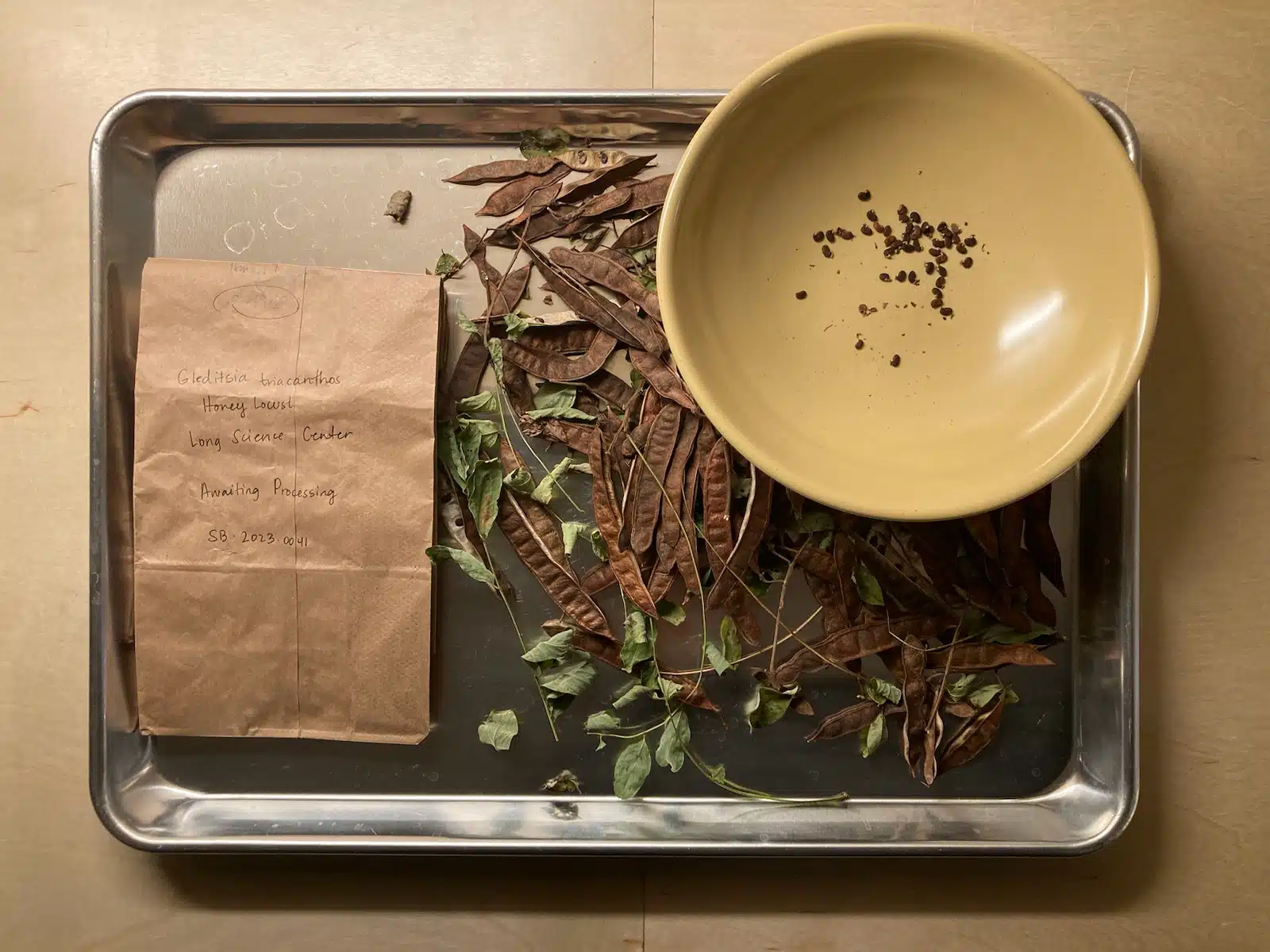
Happy birthday, Holden Seed Bank!
By Anna Funk, PhD, Science Communications Specialist
The Holden Seed Bank for regional restoration at the Holden Arboretum has just wrapped up its first year. We’re celebrating! We hope you’ll join us for “A Celebration of Seeds”... more

November 27, 2023
The Story of Ohio Family Forests
By John Brett, Forestry Outreach Fellow
Pull on a sweater and grab something warm to drink, it’s time to reflect and be grateful as the world dozes off for the winter. Many of us are lucky... more

August 1, 2023
Rescuing Edible and Medicinal Plants
By Aisha Zungu, Woodland Community Forestry Intern
Summer is a flowering and fruiting time when many of the bushes and shrubs come to life with their colors and fruits. Summer is also a time of change for... more
April 7, 2023
A Day in Bole Woods with Holden Researchers
By Claudia Bashian-Victoroff, MS, Research Specialist
The Soil Ecology Lab here at the Holden Arboretum is all about collaboration! This week members of our lab spent a day in Bole Woods to do site maintenance for... more

July 8, 2022
A Morning in Working Woods
By Emma Dawson- Glass, Research Specialist
Have you ever wondered what the day-to-day of scientists looks like? Certainly, daily activities will vary greatly depending on what kind of scientist you are, what time of year it... more

March 14, 2022
Small Woodland Management Manual
This manual provides a shorthand guide to effectively manage your woodlands. more

September 29, 2021
Pass on or Protect the Woods
There are many options to consider when you own undeveloped land. Let us help you address some concerns! more