Take a stroll through the forest at the Holden Arboretum on a cold winter’s morning — the trails are open year-round — and the quiet stillness might trick you into thinking life has closed up shop for the season. But look closer and you’ll find the forest is far from asleep, and that Holden’s scientists and land managers are bundled up, still out at work.
See the Forest for the Trees
When the leaves have fallen, and the leafy vegetation has died back for the year, it’s actually much easier to get a clear view of the layout of the trees in a stand of woods. That’s part of the reason why Jessica Miller Mecaskey, forester with Holden Arboretum Consulting Forestry, spends her winter months assessing forests for landowners.
“It’s the time of year where I’m really exercising my bark and bud identification skills,” she says. Holden’s consulting foresters are out and active, helping their clients, and visiting sites with landowners interested in managing their woodlands. “We’re grateful when landowners are willing to brave the snowdrifts with us,” she says.
For the landowners interested in Timber Stand Improvement, winter is a great time to inventory a timber stand, mark trees for removal, and even bring out heavy equipment to do work — soils don’t take as much damage from equipment when they’re frozen.
Tracking Winter Tree Behavior
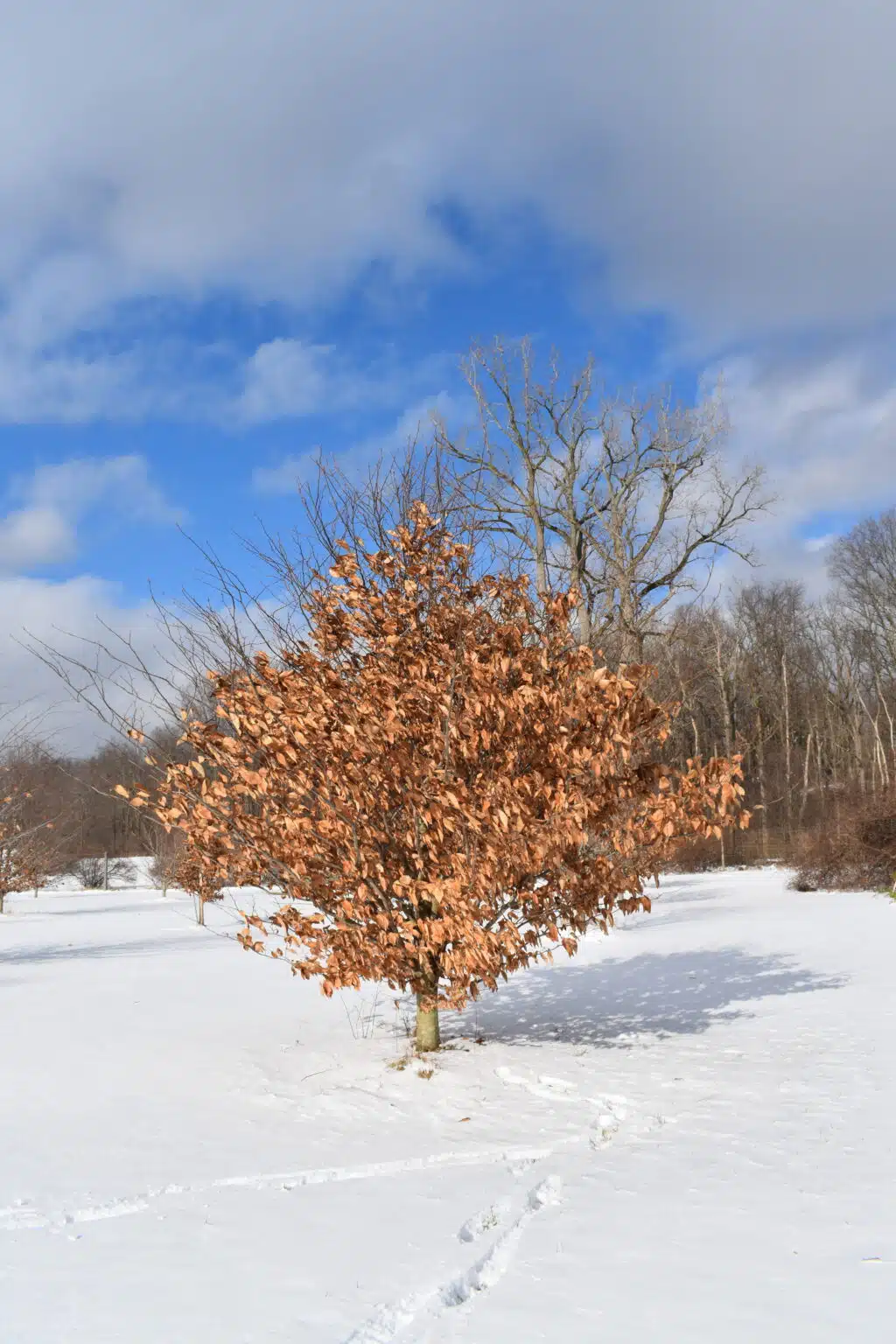
Beginning in the fall and continuing through the winter, research specialist Brianna Shepherd is monitoring beech at Holden weekly. She’s tracking when (or if) they finally let go of their foliage in order to see whether beech leaf disease affects when trees drop their leaves.
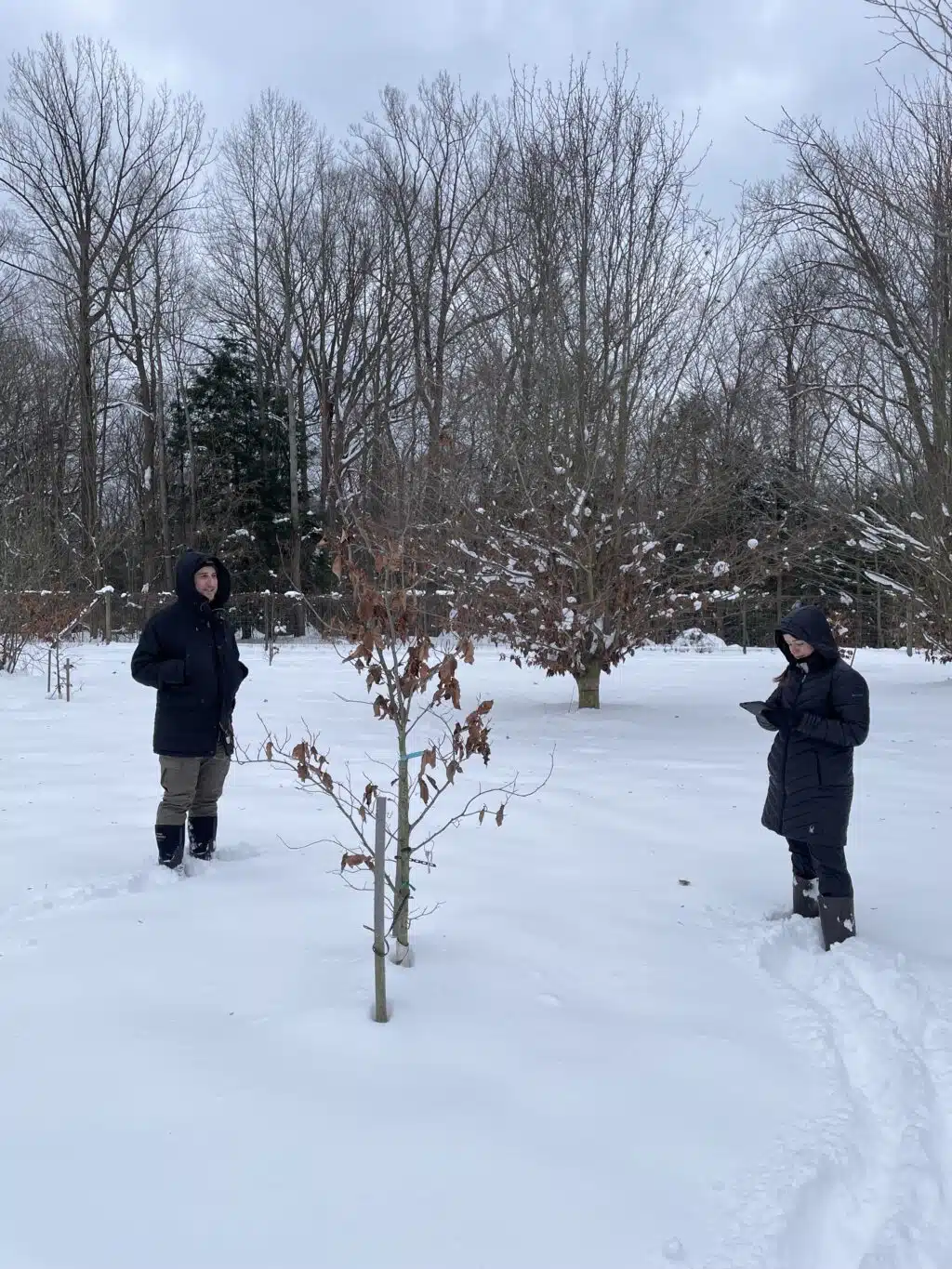
Not all trees that you’d expect to drop their leaves do every fall. American beech, for instance, often hold onto their leaves through winter, a behavior called marcescence, which makes it more difficult to monitor leaf drop. Scientists aren’t entirely sure why trees do this — one theory is that it protects buds from harsh weather.
Winter is also a great time to measure tree growth. Shepherd and her colleague, David Jenkins, research specialist in the Stuble lab, measure the growth of certain trees in the Working Woods Learning Forest twice each year, including once per winter.
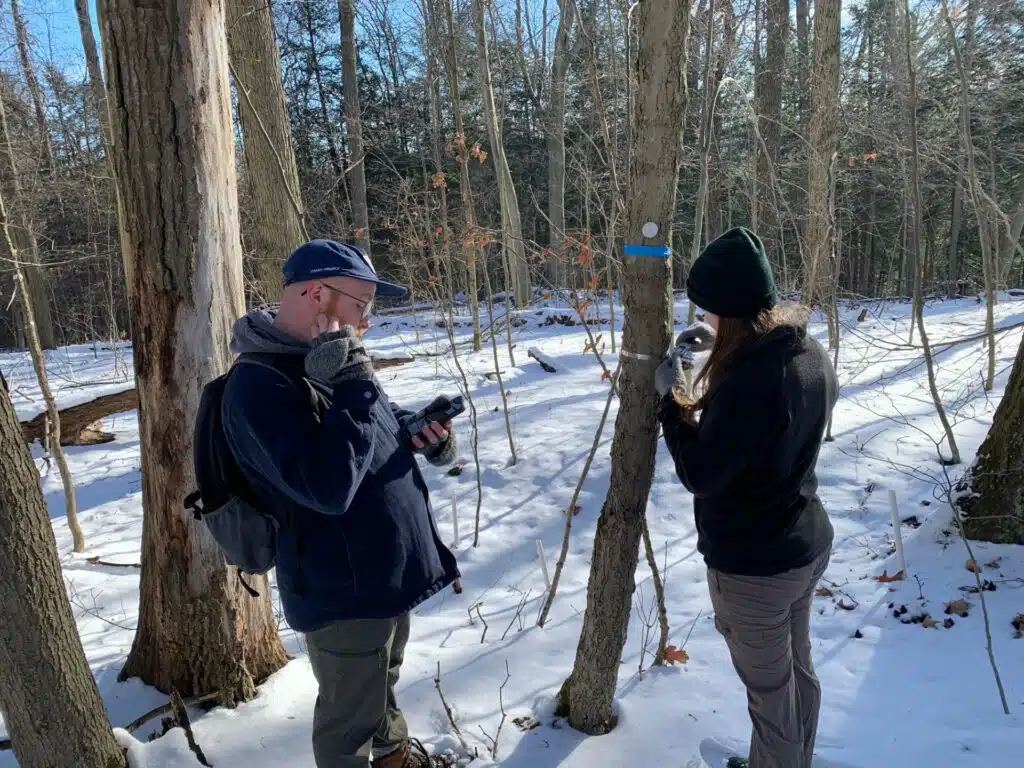
Trees are measured in different stands at Working Woods that have received different types of management, like girdling of canopy trees or removal of shrubby invasive species, to see how the treatments are impacting growth of the remaining trees — the study is being led by ecologist Kevin Mueller at Cleveland State.
Learn more about Working Woods:
Restoring Forests, Engaging Landowners, Advancing Science—All in One Place
In Plain Sight
The hemlock woolly adelgid (HWA) is a tiny invasive insect that’s been found in some of Holden’s natural areas. The pest feeds on tree sap and can kill a hemlock in as little as four years, making early detection critical for protecting trees. In winter, the adelgid produces a characteristic white, woolly wax coating that protects it from extreme cold — and makes it much easier for scientists to spot.
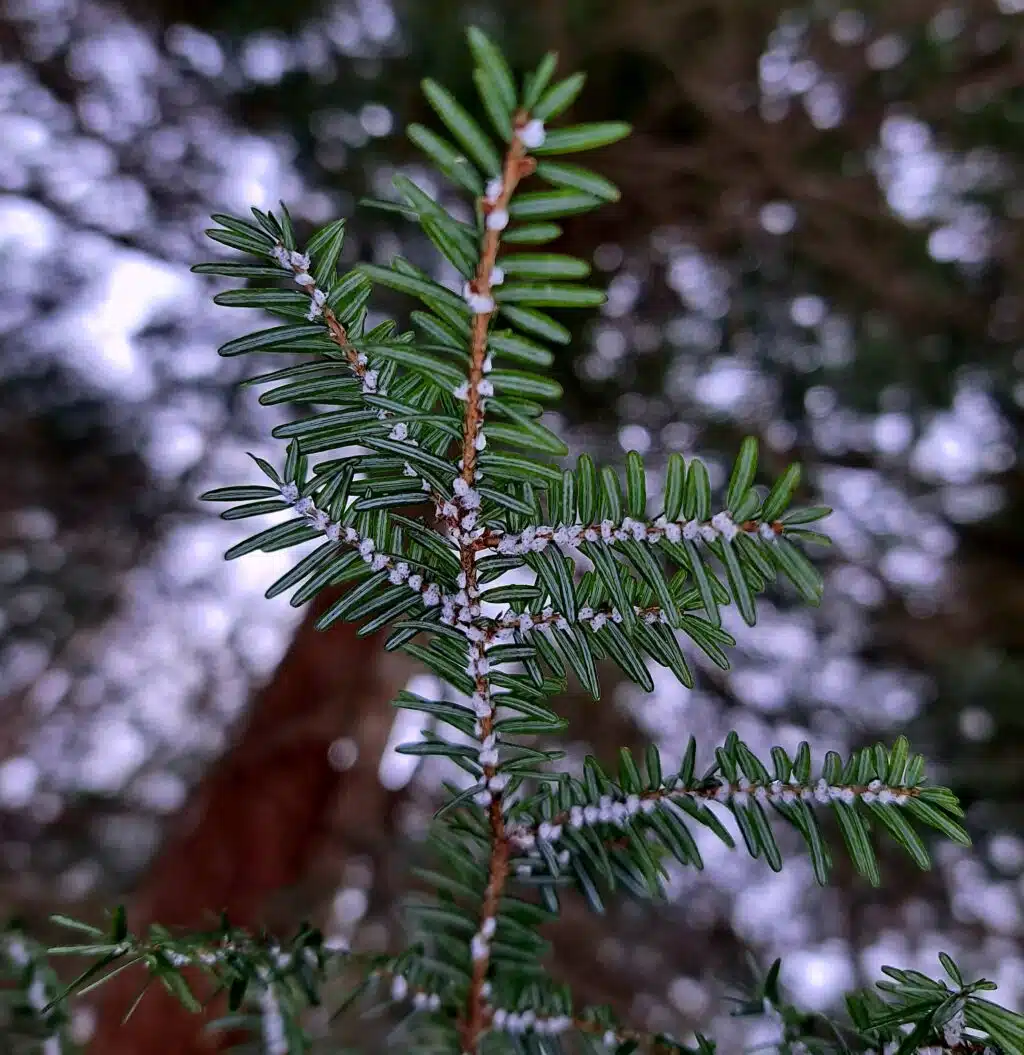
Andy Lance and the rest of Holden’s conservation team spend winter months monitoring for the pest in Holden’s natural areas. “We’ve detected HWA on hemlocks at Little Mountain and in Pierson Creek Valley,” Lance notes, “but to date it has not been confirmed in Stebbins Gulch or Baldwin Natural Areas, so we keep a very close eye on those areas.”
Learn more about Forest Pests & Diseases
This year, they’re also testing out new sampling methods that would allow them to check for the presence of HWA DNA in airborne particles collected at each site using what’s called an eDNA (environmental DNA) trap. If they find HWA, they’ll treat the infestations come spring, after the trees break dormancy.
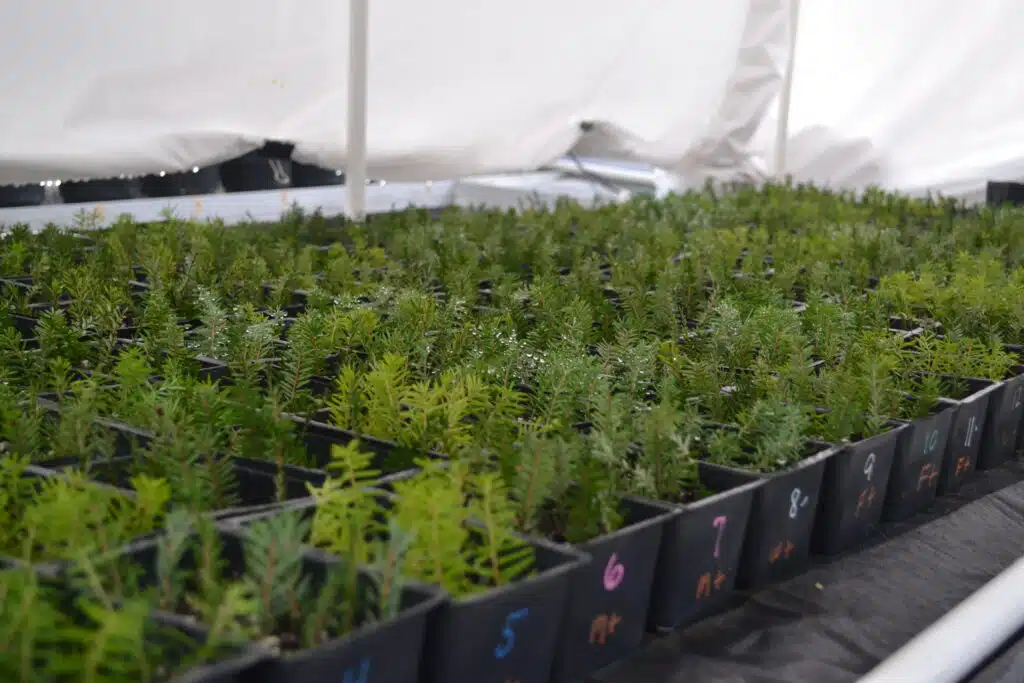
Meanwhile, the fight against HWA continues year-round in the greenhouse, where senior research specialist Danny Dlugos is experimenting with a new way to propagate hemlock cuttings. It’s an important part of Holden’s research on breeding HWA-resistant trees. The cuttings are placed in late fall in a misting chamber, and are monitored through winter as they develop roots.
Holden’s Resident Juncos
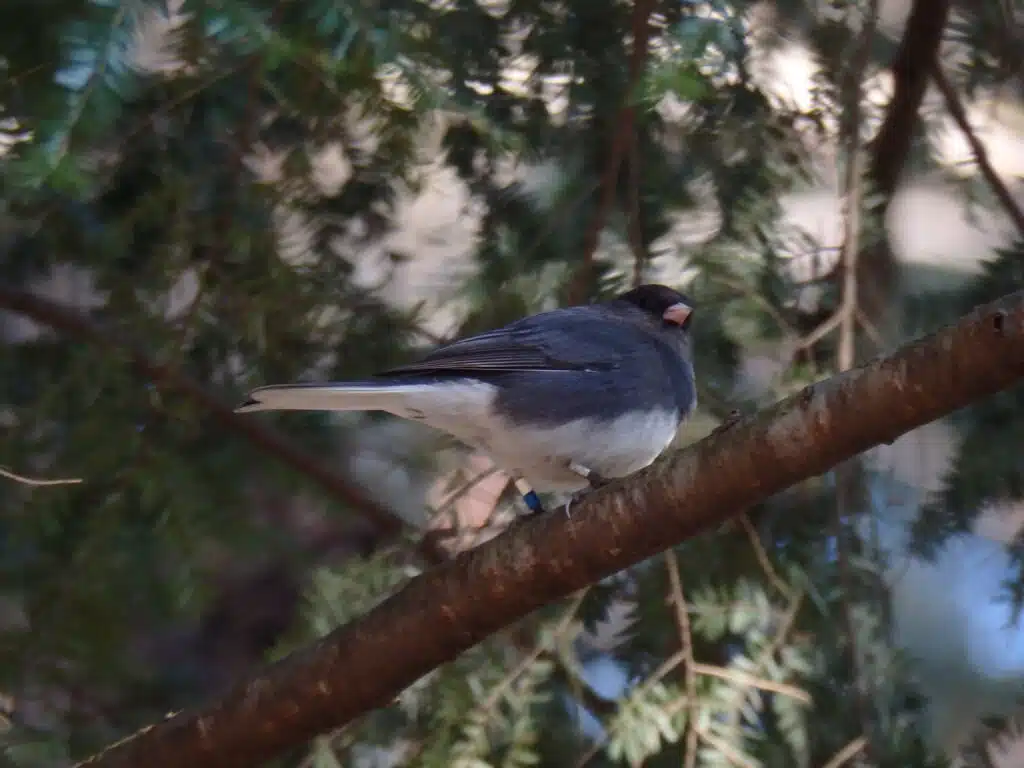
Most Ohioans know dark-eyed juncos — the little slate-gray birds pecking the ground underneath your backyard feeder — as winter visitors. But Mike Watson, Holden’s wildlife biologist, has discovered something surprising about the Holden flock: Some juncos stay at the arboretum year-round. To track this, Watson has captured and banded summer juncos since 2017 to see if they’re the same birds we see here in winter.
By putting bands of unique color combinations around the birds’ legs, biologists can identify individual birds. Then, during winter, cameras focused on feeders in Holden’s natural areas reveal which birds have stuck around instead of migrating south. So far, the data shows more than 40% of summer-banded birds appear in at least one subsequent winter.
Watson and his colleagues aren’t only capturing juncos for banding. Mist-netting birds also allows them to check their legs for microorganisms — like the nematode that causes beech leaf disease. Watson catches the birds, and Mary Pitts, research specialist in the Burke lab, carefully washes their legs with a damp cotton swab, collecting a sample to check for DNA of different organisms.
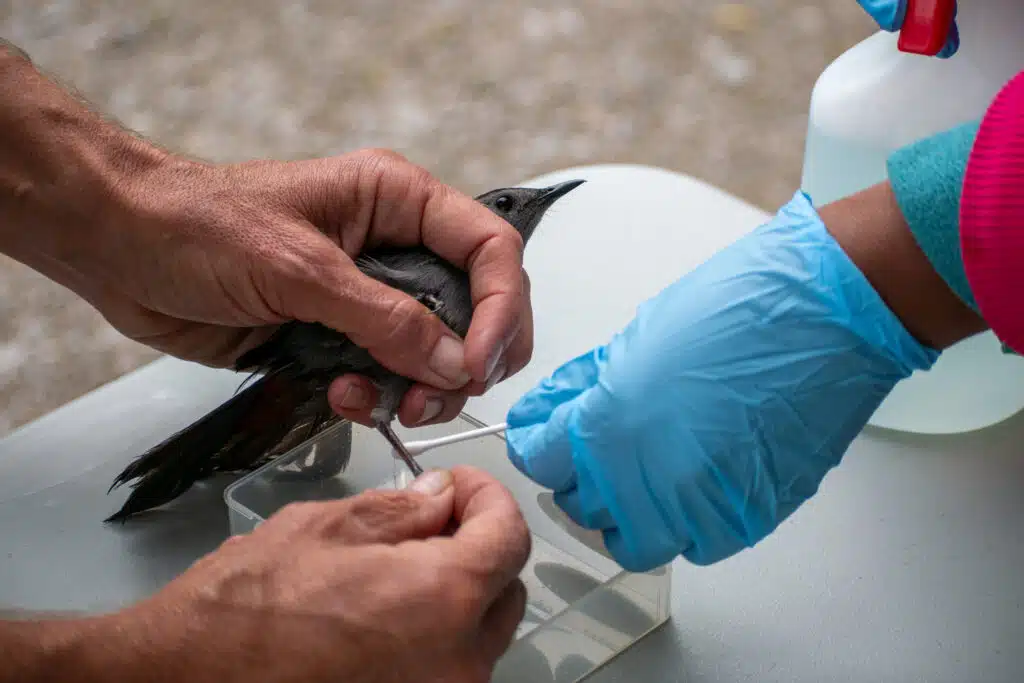
“As animals move through their landscapes, they can move microorganisms, including pests and pathogens, with them,” Watson explains. By netting birds across all seasons — including some very cold winter sessions — researchers are building a picture of who is hitching a ride on birds’ legs, and how this changes with the seasons.
The Winter Forest
So the next time you walk through winter woods, remember: dormant doesn’t mean dead. Trees are being measured, monitored, and marked. Invasive insects are being observed at their most visible. Birds are revealing their migration habits at feeders. Even the frozen ground is working for the forest, allowing equipment to move carefully through when needed.
The forest never truly sleeps — and neither do the people dedicated to understanding and protecting it!

Anna Funk, PhD
Science Communications Specialist
Anna Funk is the Science Communication Specialist for Holden Forests & Gardens. She earned her Ph.D. studying prairie restoration before leaving the research world to help tell scientists’ stories. Today, she wears many hats, working as a writer, editor, journalist and more — anything that lets her share her appreciation of science and its impact with others.
Here’s more to explore

December 19, 2025
New Study Reveals How Beech Leaf Disease Disrupts the Forest Ecosystem
As beech leaf disease continues to sweep across our region, the longer-term effects of the disease are starting to reveal themselves in the epicenter — right here in Lake County.... more

November 20, 2025
Know the Forest Pests That Live in Your Area: Holden Researchers Get the Word Out
By Anna Funk, PhD, Science Communications Specialist
Do you know what the symptoms of beech leaf disease look like? What about hemlock woolly adelgid — can you tell it from elongate hemlock scale, and did you know... more

November 11, 2025
What’s That Thing on the Emergent Tower? HF&G Tests New Forest Pest Monitoring Tool
By Anna Funk, PhD, Science Communications Specialist
If you’ve been to the Kalberer Emergent Tower at the Holden Arboretum lately — let’s be honest, who hasn’t (#fall) — you may have noticed something new: A pale purple... more

October 22, 2025
Newfound Garlic Mustard Aphid May Help, but Won’t Solve, Our Garlic Mustard Problem
By Anna Funk, PhD, Science Communications Specialist
In 2021, Rebecah Troutman — at the time Holden Arboretum’s natural areas biologist — was making her rounds and came across an insect she hadn’t seen before. It appeared to... more

September 8, 2025
Ongoing HF&G Study Tests a Novel Way to Give Urban Tree Plantings a Boost
By Anna Funk, PhD, Science Communications Specialist
Planting trees in cities can bring a host of benefits. They pull pollutants and carbon dioxide out of the air, cool neighborhoods, reduce stormwater runoff, and make streets more inviting... more

April 29, 2025
New Study Confirms Beech Leaf Disease Threatens European Beech Trees, Too
KIRTLAND, OHIO — A new study from Holden Forests & Gardens and a team at USDA Agricultural Research Service confirms that beech leaf disease—a fast-spreading disease already devastating American beech... more

April 28, 2025
Study Shows Forest Soils Still Bear the Scars of Industrial Pollution
By Anna Funk, PhD, Science Communications Specialist
KIRTLAND, OHIO — After 12 years of carefully tracking tree growth and soil chemistry, researchers at Holden Forests & Gardens (HF&G) have confirmed that phosphorus is now a limiting nutrient... more

April 28, 2025
A New Way to Detect Beech Leaf Disease: Rainwater Running Down Tree Trunks
KIRTLAND, OHIO — How do you detect a pathogen that lives way, way up in a tree’s canopy? A novel method for detecting beech leaf disease from the ground—using rainwater... more

April 25, 2025
Good News for Forests: Invasive Shrub Removal Gets Easier After Two Years of Work
By Anna Funk, PhD, Science Communications Specialist
KIRTLAND, OHIO — A new study from researchers at the Holden Arboretum offers encouraging news for forest managers battling non-native shrubs: the effort needed to control these invaders drops dramatically... more