One of my favorite plants is the vanilla orchid and I am lucky to have a mature vanilla orchid in the Madagascar biome that flowers fairly regularly. When the vanilla orchid flowers, I hand pollinate each bloom in hopes of the resulting fruit – a vanilla bean!
Before getting into pollination, let’s cover some background information. Vanilla orchids are all in the Orchid family, Orchidaceae, they all fall within the genus Vanilla, and within this genus there are numerous species. Vanilla flavoring, the natural kind, comes from the bean shaped fruit of the vanilla orchid.
The orchid itself is unique; it is a semi terrestrial, vining, climbing orchid reaching heights of fifty or more feet in its native environment and it’s the only orchid that produces edible fruit. They thrive in bright shade and will not bloom until the vine is well established with a thick stem and good environmental conditions. Each flower lasts only one day and once the vanilla orchid starts producing flowers, pollination is the next step in the journey to a vanilla bean.
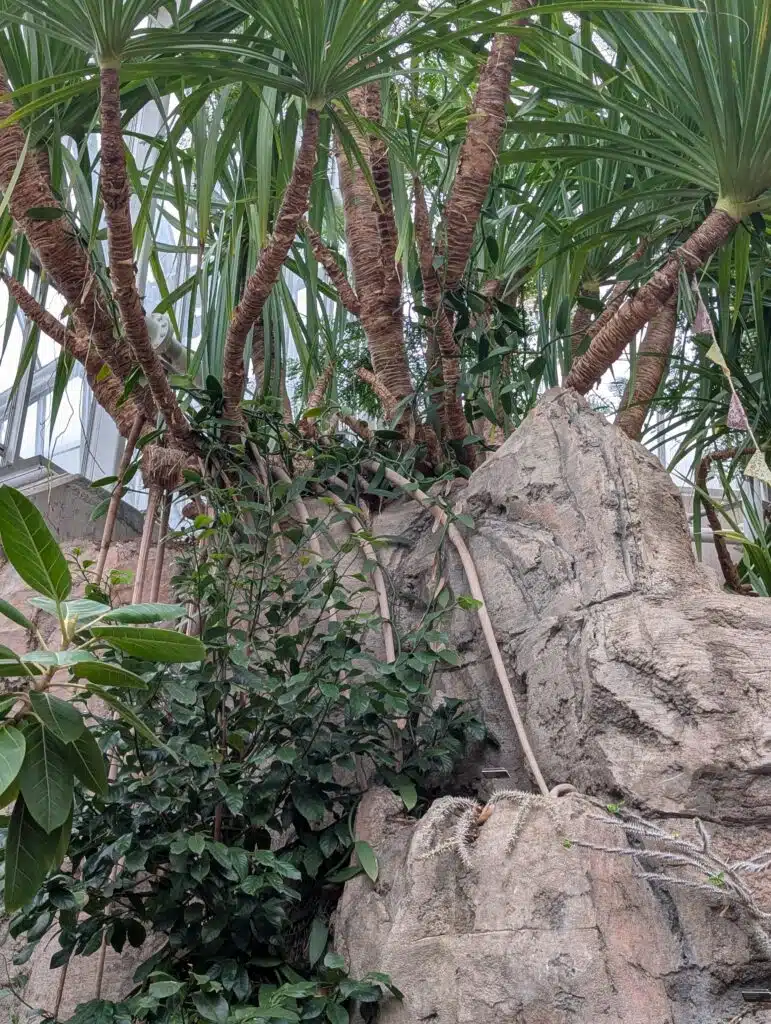
Pollination of vanilla orchids is its own interesting story. Vanilla orchids are native to Mexico and Central America, and in these locations, there is a tiny Melipona bee that is solely responsible for pollinating vanilla orchids. The Melipona bee is native only to the neotropics, and when vanilla is grown outside the Melipona bee’s native range, the flowers must be hand pollinated. So, when the vanilla orchid flowers are in the biome, I must hand pollinate.
Pollination of these orchids is a delicate task. First, I must check for flowers every day and pollinate early in the morning, as this was when flowers freshest and hand pollination is most likely to be successful. To pollinate, I tear back the petals to get a good look at the reproductive portion of the flower. Within the flower, there are the anthers which have pollen. This is the male portion of the flower. There are also the stigmata, which is the female portion of the flower. My job as hand pollinator is to get the pollen from the anthers to the stigmata. The tricky part about vanilla orchids is a protrusion in the bloom separating the anthers and stigmata called a rostellum. In nature, the rostellum prevents self-pollination, so the Melipona bee would visit one vanilla flower after another, transporting pollen from the anthers of one bloom to the stigmata of another. For hand pollination though, the rostellum is in my way. I use a small pointed wooden stake to gently push up the rostellum, which will flatten into place behind the anthers. At this point, I gently squeeze the anthers against the rostellum flattened behind it to secure everything in the new position. This is a delicate process and with too light a touch and rostellum doesn’t stay put, but too heavy a touch and the anthers are squeezed to bits. But with just the right pressure the rostellum no longer separates the anthers and stigmata allowing the pollen to transfer. Then, if pollination is successful, after about a week, the ovary, which is located directly behind the flower itself, will begin to swell. Over time, it will grow into a vanilla bean.
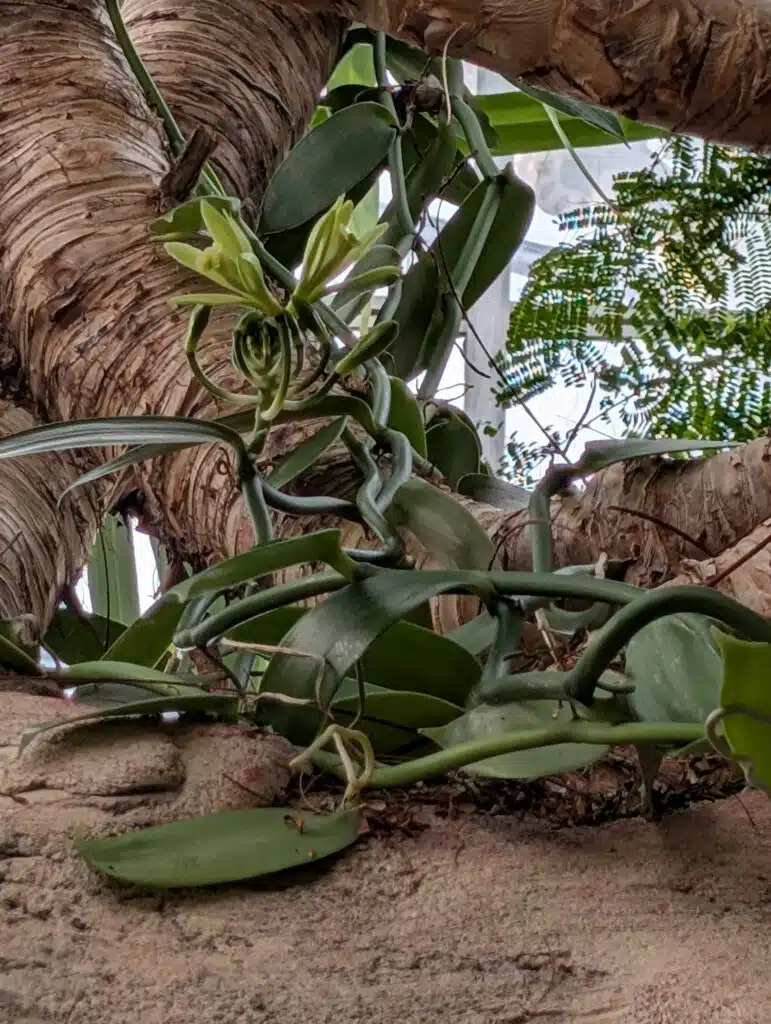
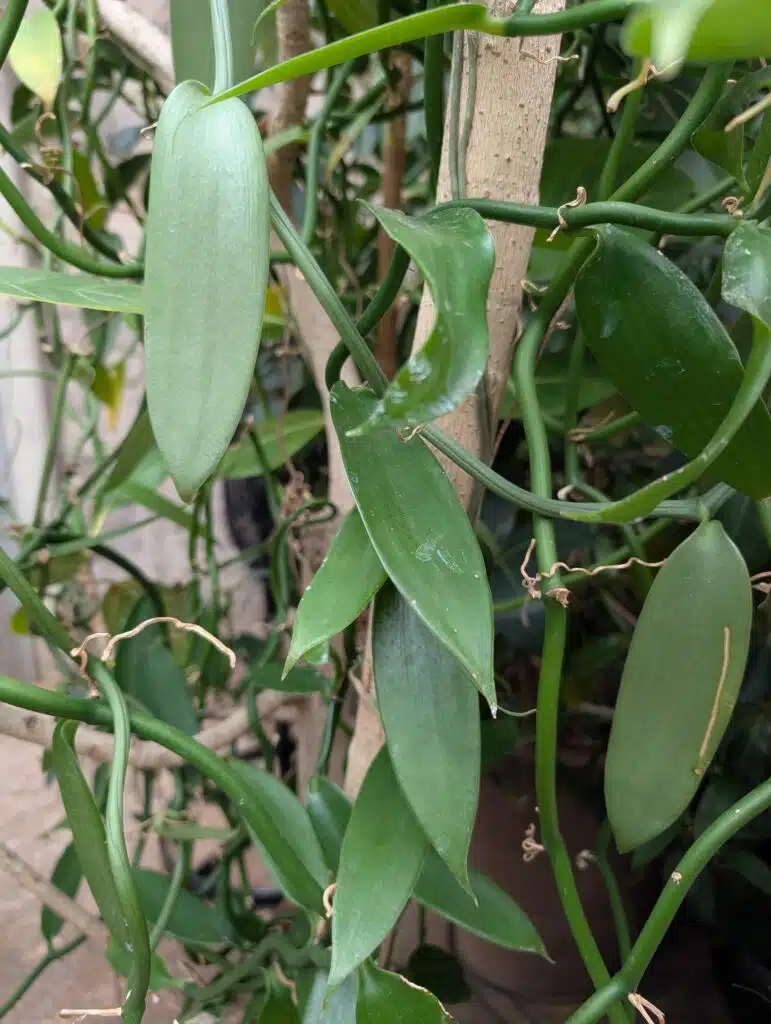
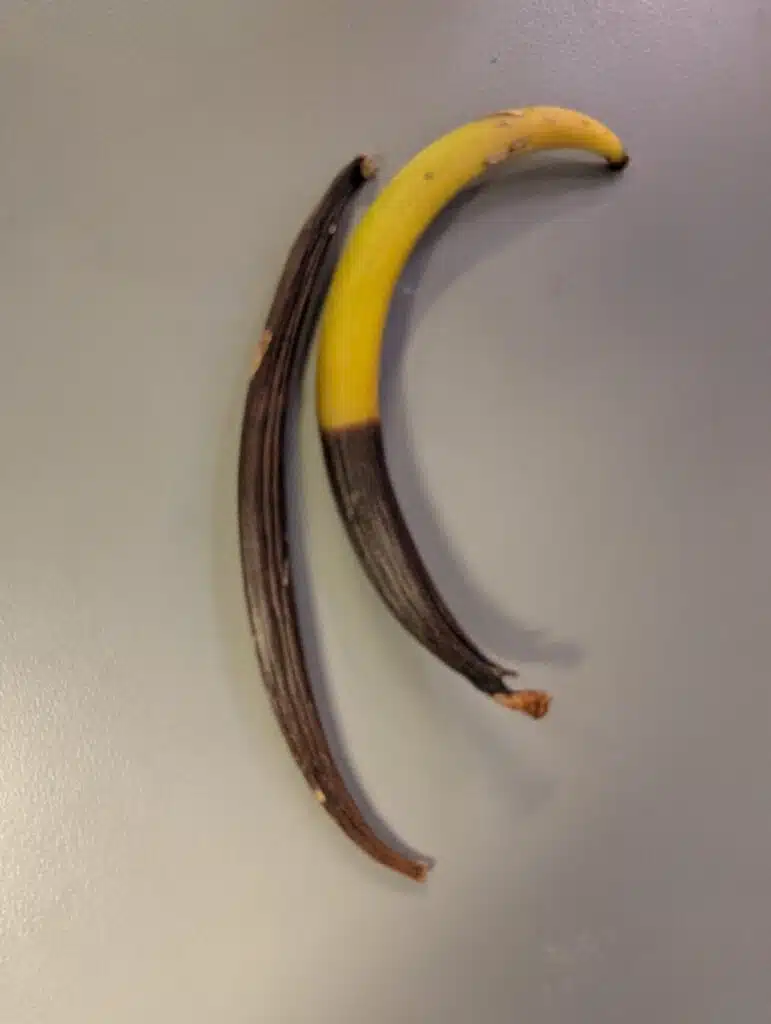
The beans take months to ripen, and when they begin to turn yellow at the tips it will be time to harvest. From there, there’s a curing and drying process which ensures the great vanilla taste we all know and love.

Sadie Smith
Senior Horticulturist
Here’s more to explore

March 2, 2026
HF&G Builds on Rare Oak Conservation Work Through Collection, Propagation, and Collaboration
By Alexandra Faidiga, Assistant Curator
In the last week of January, I returned from a plant collecting trip through coastal Georgia, Florida, and South Carolina in search of bluff oak (Quercus austrina), an uncommon oak with a... more
July 17, 2025
It’s Poppin’: July 17
It’s summer! Did you enjoy the long holiday weekend? If you took time off from visiting our campuses, now is the time to come back, as our summer wildflowers are... more

July 3, 2025
It’s Poppin’: July 3
By Alexandra Faidiga, Assistant Curator
Happy 4th of July! There’s plenty to see out in the gardens this weekend, with milkweeds, black-eyed Susans, and a host of other mid-summer favorites in bloom. Cleveland Botanical Garden... more

June 20, 2025
It’s Poppin’: June 20
Hot and sticky weather arrived this week! This week I teamed with Angelica Vasilatos, Ferry Foundation curation intern at the Botanical Garden, to detail what’s poppin’ in Kirtland and Cleveland. ... more

June 13, 2025
It’s Poppin’: June 13
As I walked the campuses this week, I was struck by the number of beautiful, calming white blooms. Before we move into the heat of the summer, let’s take a... more

June 6, 2025
It’s Poppin’: June 6
After a few weeks on a plant expedition to China, it was my pleasure to stroll the grounds of the Holden Arboretum and Cleveland Botanical Garden to see what was... more

May 29, 2025
It’s Poppin’: May 29
By Alexandra Faidiga, Assistant Curator
Cleveland Botanical Garden Last Saturday was the opening day of our summer exhibit Between Water and Stone, a 50th anniversary celebration of our Japanese Garden. When you step out onto... more

May 23, 2025
It’s Poppin’: May 23
By Alexandra Faidiga, Assistant Curator
It’s been a strange couple of weeks weather-wise—remember when it was 80 degrees and sunny, and now it’s rainy and chilly? No matter! The cool weather actually helps prolong the... more

May 15, 2025
It’s Poppin’: May 15
By Alexandra Faidiga, Assistant Curator
This week, the Rhododendron Gardens at the arboretum are in their full glory, and flowers are lighting up various pockets and corners at the botanical gardens. With the recent rain... more